7 Local SEO Automation Fixes That Actually Boost Map Visibility
7 Local SEO Automation Fixes That Actually Boost Map Visibility
If you are still obsessing over your NAP (Name, Address, Phone number) consistency as the primary driver for your local rankings, you are fighting a battle that was won in 2018. In the current landscape of search, Google has moved far beyond static information. Today, the “Map Pack” is governed by real-world behavioral signals, entity strength, and proximity validation. As an SEO specialist who has spent the last four years shipping technical and local SEO systems for global brands, I’ve seen the shift firsthand: Google doesn’t just want to know where you are; it wants proof that people actually visit you.
My name is Hamza Suleman, and my work focuses on bridging the gap between traditional SEO and AI-driven automation. I’ve seen countless business owners and marketing managers hit a “ranking ceiling” where their profile is 100% complete, yet they remain stuck in the #5 or #6 spot. The reason? They lack the behavioral momentum that Google’s algorithm now requires. To dominate the 3-pack in 2025 and 2026, you need to transition from manual updates to sophisticated local seo automation. This guide will walk you through seven advanced automation fixes that move the needle by simulating real-world popularity and technical authority.
Fix #1: Automating Behavioral Signals with CTR Manipulation
It is no longer a secret in the high-level SEO community: Click-Through Rate (CTR) is arguably the most significant ranking factor for Google Maps. When a user searches for a service and clicks on your business profile over a competitor’s, it sends a powerful signal to Google that your business is the most relevant result. However, waiting for organic clicks to build up can take months, especially in hyper-competitive niches like legal, medical, or home services.
This is where a high-quality ctr manipulation tool becomes essential. But there is a caveat – Google’s AI is incredibly adept at spotting low-quality bot traffic. If you use cheap, data-center IP bots, you risk a permanent shadowban of your Google Business Profile (GBP). To automate this safely, you must use a system that leverages residential proxy networks and real device fingerprints.
In my experience, Viper Tools has set the industry standard here. By utilizing their ctr manipulation tool known as the Kraken, you can simulate search-and-click behavior that looks indistinguishable from a real human user. This isn’t just about clicking a link; it’s about the “pogo-sticking” effect – searching for a keyword, scrolling past competitors, and spending time engaging with your profile’s photos and reviews. Understanding Why Most Google Maps Ranking Software Fails to Deliver Real Calls is crucial; if the traffic doesn’t mimic human intent, Google simply ignores the data. By automating this signal, you create a “popularity surge” that forces Google to re-evaluate your position in the Map Pack.
Fix #2: Implementing “Live Drive” Geo-Signals
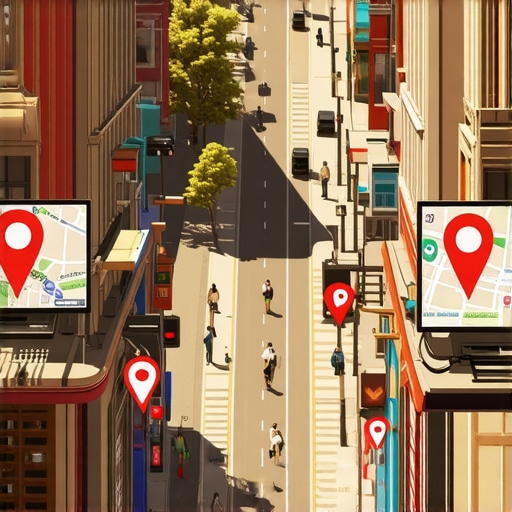
Proximity is a foundational pillar of local search, but Google’s understanding of proximity has evolved. It’s no longer just about your office’s physical address; it’s about the movement of mobile devices toward that address. Google tracks GPS pings and “Quality of Location” signals to verify if a business is a legitimate destination or just a “ghost office.”
To combat this, advanced practitioners are now using Live Drive technology. Unlike traditional SEO tools that simply spoof an IP address, Live Drive simulates a mobile device actually moving through a city toward your business location. This creates a “pathway” signal. When Google sees multiple devices “driving” toward your coordinates from various parts of the city, it confirms your business’s real-world relevance.
This level of local seo automation is what separates the top 1% of SEOs from the rest. By using these automated geo-signals, you are essentially providing Google with the GPS data it craves to verify that you are a high-traffic, high-authority destination. This is particularly effective for businesses that operate in a “service area” but want to rank for their physical showroom or office location.
Fix #3: Automated Entity Verification & Brand Signals
In the eyes of modern search engines, your business is not just a website; it is an “Entity.” An entity is a distinct, well-defined concept that Google’s Knowledge Graph can identify. If Google cannot connect your GBP to a broader web of brand signals, you will always struggle to rank outside of a very narrow radius.
Automation can be used to build these entity signals at scale. This involves automating the distribution of your brand’s “digital footprint” across authoritative platforms. It’s about more than just citations; it’s about brand mentions, social signals, and press releases that use consistent Schema markup. I often tell my clients that they need to learn How to Build a 2026 Brand Entity That AI Search Can’t Ignore.
Data shows that brand search volume – people actually typing your business name into the search bar – is now more impactful than traditional backlinks. By automating the creation of these signals, you ensure that Google recognizes your business as a trusted authority. You should also explore 3 New Ways to Verify Your Brand Entity for 2026 SEO to stay ahead of the curve as Google moves toward a more “AI-first” indexing model. When your entity is strong, your rankings become much more “sticky” and resistant to algorithm updates.
Fix #4: Scaling Local Content with GMB Ranking Software
Consistency is the bane of most business owners. Google rewards profiles that are active, but posting manually every day is a chore that most people eventually abandon. Using a dedicated gmb ranking software allows you to schedule and automate your engagement.
However, the “fix” here isn’t just scheduling posts; it’s using AI to hyper-localize the content. Instead of posting the same generic “Call us for a quote” message, your automation should include localized keywords and mentions of neighborhood landmarks. For example, if you are a plumber in Austin, your automated posts should mention “serving the Zilker neighborhood” or “emergency repairs near Lady Bird Lake.”
The platinum-aio tool is an excellent example of a google maps ranking tool that handles this level of complexity. It allows you to manage multiple profiles and automate the upload of geo-tagged photos. Remember, every photo you upload contains EXIF data (metadata) that includes GPS coordinates. Automating the upload of these “cleansed” and optimized photos provides a constant stream of fresh geo-signals to Google, proving that you are active in your specific service area. This is a core component of any robust local seo automation strategy.
Fix #5: Using an SEO Traffic Generator for Proximity Expansion
One of the most common complaints I hear is: “I rank #1 in my block, but as soon as I go two miles away, I disappear.” This is known as the “proximity bubble.” Google naturally favors the closest business to the searcher, but you can expand this bubble by proving that people from further away are willing to travel to you.
An seo traffic generator can be used to simulate searches from specific zip codes outside your immediate radius. If Google sees that users in a neighboring town are searching for “best chiropractor near me” and then clicking on your profile (even if you are 5 miles away), it begins to expand your ranking “heat map.”
Using the platinum-aio as a rank google business profile strategy allows you to target these specific nodes. By sending automated, high-intent traffic from a wider radius, you signal to the algorithm that your business is a “regional authority,” not just a “neighborhood convenience.” This is how you win the “Proximity War” without having to open a dozen physical offices. According to Why Real-World Brand Popularity Dictates 2026 SEO Rankings, Google is increasingly prioritizing businesses that show “gravitational pull” from a distance.
Fix #6: Automating Review Sentiment & Response
We all know reviews are important, but the content of those reviews is becoming the primary driver for relevance. Google’s Natural Language Processing (NLP) reads your reviews to understand what services you actually provide. If your reviews say “great service,” that’s fine. If they say “the best 24-hour emergency plumber in Seattle,” you just gained a massive boost for that specific keyword.
Automation can be used to streamline the review acquisition process, but the real “fix” is automating the response and the prompting. Use automation to send follow-up texts to customers that include a suggested “topic” for their review. Furthermore, use AI-driven tools to respond to every review instantly. Your responses should also be keyword-rich.
Google looks for “Expert Human Signals” in these interactions. By ensuring your reviews and responses are filled with relevant terminology, you are feeding the NLP engine exactly what it needs to categorize you correctly. For a deeper dive into this, check out How Google Identifies Expert Human Signals in 2026 SEO. High-quality automation ensures that no review goes unanswered and that every interaction reinforces your brand’s expertise.
Fix #7: Fixing the “Data Gap” with GA4 Automation
The final fix is perhaps the most technical: you cannot optimize what you do not measure. Most local businesses have a massive “data gap” between their GBP traffic and their actual conversions. If you are using local seo automation, you need to know exactly which signals are driving phone calls and which are just vanity metrics.
Automating your GA4 (Google Analytics 4) reporting to specifically track “Map Interactions” is vital. You should set up automated events for “Direction Requests,” “Website Clicks from Maps,” and “Phone Lead Clicks.” Without this, you might be spending money on a google maps ranking tool without seeing the ROI. I recommend reading about how to Stop Data Gaps with These 4 GA4 Attribution Fixes [2026] to ensure your tracking is airtight. When your data is automated, you can pivot your strategy in real-time based on what the numbers are telling you.
Additionally, it is important to note that Why Brand Trust Signals Now Outrank Backlinks for 2026 SEO is a reality we must face; your GA4 data will likely show that users who find you via Maps have a much higher conversion rate than those who find you via standard organic search. Automation helps you double down on what works.
Conclusion: The Future of Local Search is Automated
The days of “set it and forget it” for Google Business Profiles are over. To compete in today’s market, you need a proactive strategy that combines technical SEO with advanced local seo automation. By focusing on behavioral signals, geo-validation, and entity strength, you move beyond the basics and start building a profile that Google cannot ignore.
Whether you are using a ctr manipulation tool like the Kraken or managing your proximity with Live Drive, the goal remains the same: prove your real-world popularity to the algorithm. For those looking to implement these high-level strategies, I highly recommend exploring the suite of tools at seovipertools.com. They offer the most cost-effective and powerful solutions for those who want to rank google business profile assets at scale, often at a fraction of the cost of legacy agencies like Agency Assassin.
Stop waiting for the algorithm to find you. Use these seven fixes to make sure you are the only choice Google has for your local keywords.