Why Your Garage Door Repair Business is Invisible in Local Map Packs
Why Your Garage Door Repair Business is Invisible in Local Map Packs
There is perhaps nothing more frustrating for a local business owner than knowing you offer the best service in town, yet your phone remains silent while competitors with fewer reviews and inferior websites rake in the leads. In the high-stakes world of garage door repair, visibility isn’t just a luxury; it’s the lifeblood of your operation. When a homeowner’s car is trapped in their garage at 7:00 AM, they aren’t scrolling to page two of the search results. They are clicking one of the top three businesses in the Google Local Map Pack.
I am Mubbshir Ul Hassan, and over the past year, I have worked on multiple website development and local SEO initiatives within the garage door repair industry. My experience helping brands like Sisi Garage Door Repair has shown me that the “Map Pack” – that coveted block of three local listings appearing at the top of Google – is where 70% of high-intent clicks happen. If you aren’t there, you are effectively invisible. In this deep-dive, we will diagnose why your business is hidden and how to reclaim your spot in the 2026 search landscape.
The “High-Spam” Industry Curse: Why Google is Hiding You
If you feel like Google is treating your legitimate business with suspicion, you aren’t imagining it. Google categorizes garage door repair companies in the same “high-spam” bracket as locksmiths and HVAC services. Historically, these niches have been plagued by “lead gen” scams – fake businesses with no physical presence that hijack local listings to sell leads to the highest bidder.
By 2026, Google’s algorithmic filters have become incredibly aggressive in an attempt to clean up the Map Pack. These filters often result in “false alarm” suspensions or “shadow-banning,” where your profile exists but is suppressed from the top results. According to ongoing discussions in Google Business Profile (GBP) support threads, even a minor change to your business name or address can trigger a verification loop that kills your call flow instantly. Google is no longer just looking for a business; it is looking for a verified entity. If the algorithm detects even a hint of inconsistency, it defaults to hiding you to protect the user experience.
The Google Business Profile (GBP) Optimization Checklist
To move from invisible to indispensable, you must move beyond basic setup. A technical audit of your GBP is the first step in the “Map Pack Formula” – a framework popularized by PushLeads research which suggests that an incomplete profile is the primary reason for invisibility.
Primary Category Accuracy
One of the most common mistakes is choosing the wrong primary category. While it might seem logical to select “Garage Door Supplier” if you sell parts, Google prioritizes “Garage Door Repair Service” for most “near me” queries. The primary category carries the most weight in the ranking algorithm. If your primary category doesn’t match the intent of the searcher’s query, you will likely be filtered out in favor of a competitor who chose more accurately.
The Services Build-Out
Don’t stop at the category. You must meticulously detail every service you offer. This includes specific high-intent keywords like “broken spring repair,” “garage door opener installation,” and “emergency 24/7 repair.” Google uses the “Services” section to match your business to long-tail searches. If a user searches for “residential garage door repair” and you haven’t explicitly listed it, you are giving Google a reason to skip you.
Visual Trust: Real-World Evidence
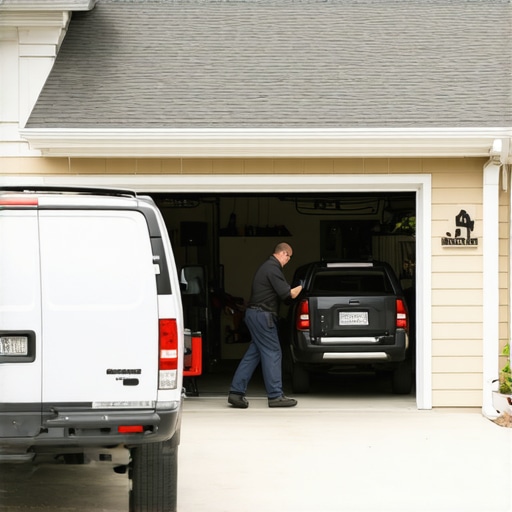
In 2026, stock photos are a ranking liability. Google’s Vision AI can easily distinguish between a generic photo of a garage door and a high-resolution photo of your actual team working on a job site in your local city. Consistent, real-world photo uploads – including your branded trucks, your technicians in uniform, and “before and after” shots – act as geo-coordinates for Google. They prove you are physically present in the area you claim to serve.
Why Your Service Area Business (SAB) Settings are Failing
Many garage door repair companies operate as Service Area Businesses (SABs), meaning they work at the customer’s location and don’t have a traditional showroom. While this is a legitimate business model, it is much harder to rank than a brick-and-mortar location.
The biggest pitfall is selecting a service area that is too wide. If you claim to cover a 100-mile radius, Google’s algorithm views your relevance as “diluted.” The “proximity filter” is stronger than ever; Google prefers to show a business located 2 miles from the searcher over a business 20 miles away, even if the latter has more reviews. To fix this, focus your service area on the specific zip codes where you actually perform the most work. Furthermore, Google requires external confirmation that your business exists. This is where “citations” (mentions of your name, address, and phone number on sites like Yelp, Angi, and local chambers of commerce) become vital. Without these “digital breadcrumbs,” Google lacks the confidence to place an SAB in the Map Pack.
The 2026 Shift: Why Trust Signals Outrank Backlinks
The days of ranking in the Map Pack solely by building thousands of low-quality backlinks are over. In 2026, the ranking currency has shifted toward “Brand Trust Signals” and “Human-Verified Authors.” Google is increasingly prioritizing businesses that demonstrate E-E-A-T (Experience, Expertise, Authoritativeness, and Trustworthiness) at the entity level.
This is why Why Brand Trust Signals Now Outrank Backlinks for 2026 SEO is a critical concept for garage door owners to understand. Google now looks for “Community Trust Signals,” such as mentions in local news outlets or sponsorships of local little league teams. Additionally, having content on your site written by verified experts is now a ranking factor. This shift is why Why Human-Verified Authors Win the 2026 SEO Ranking Race has become a major topic; Google wants to know that a real person with industry experience is standing behind the information provided.
A word of caution: many owners are tempted to use shortcuts. However, Why Artificial Clicks From CTR Manipulation Software Often Kill Map Pack Visibility is a lesson learned the hard way by many. Google’s 2026 AI can now detect “ghost traffic” and artificial click patterns with startling accuracy. If you use bots to click your Map listing, you aren’t “gaming” the system; you are flagging your business for a manual review. Similarly, Why Your GMB Ranking Software Is Failing to Produce Real Map Calls is often due to the fact that these tools focus on vanity metrics rather than the trust signals Google actually values. Instead, focus on How Google Detects Human Content Signals for 2026 SEO Rankings to ensure your website and profile reflect genuine local authority.
Reviews: The Most Underused Ranking Signal
While most business owners know they need reviews, few understand that the content of the review is just as important as the star rating. In 2026, Google’s Natural Language Processing (NLP) analyzes reviews to see if customers are confirming your services.
When a customer leaves a review saying, “Great job!”, it helps your reputation but does little for your SEO. However, if a customer writes, “They did a fantastic job with my garage door installation and were the most professional garage door installers I’ve used,” it sends a massive signal to Google that you are a relevant result for those specific keywords. Encourage your customers to mention the specific service they received and the city they are in. Google uses this sentiment and keyword density to determine your local authority. If your competitors have reviews mentioning “broken spring” and you don’t, guess who Google will rank when someone searches for that specific repair?
Troubleshooting a Hidden or Suspended Profile
If your profile has completely vanished, you are likely facing a “compliance crisis.” This often happens when Google’s automated systems flag your data as inconsistent with official records. To fix this, you must be prepared for a formal appeal. This process has become more rigorous in 2026, often requiring video verification of your tools, branded vehicle, and even business licenses.
To prevent this, ensure your NAP (Name, Address, Phone) is identical across the web. If your business is listed as “City Garage Doors” on your website but “City Garage Door Repair” on your GBP, that’s a red flag. If you are struggling with technical hurdles, looking into 7 Local SEO Automation Fixes That Actually Boost Map Visibility can help streamline the process of keeping your citations and profile data synchronized without triggering spam filters.
Conclusion: Reclaiming Your Local Dominance
Being invisible in the Local Map Pack is not a permanent sentence, but it is a sign that your current strategy is out of sync with 2026 SEO realities. The shift from “gaming the system” to building a “Brand Entity” is mandatory. By focusing on technical GBP accuracy, localized trust signals, and genuine human engagement, you can move your business from the shadows to the top of the search results.
Stop letting your competitors take the leads that should be yours. Audit your Google Business Profile today, ensure your service areas are realistic, and start treating your local presence as the digital storefront it truly is. If you’re ready to fix your visibility issues and dominate the local market, now is the time to act.