Why Your Marketing Agency Needs Parallels Desktop for Windows-Only Software Compatibility
Why Your Marketing Agency Needs Parallels Desktop for Windows-Only Software Compatibility
In the high-stakes world of marketing operations, the tools we choose define the speed at which we can execute. If you walk into any top-tier creative or digital agency today, you’ll see a sea of sleek silver and space gray. The MacBook is the undisputed king of the agency ecosystem, favored for its design-centric OS, superior color accuracy, and the status it signals to clients. However, as any Director of Marketing Operations will tell you, the aesthetic harmony of a Mac-based office often hits a hard, cold wall when it meets the reality of corporate client environments.
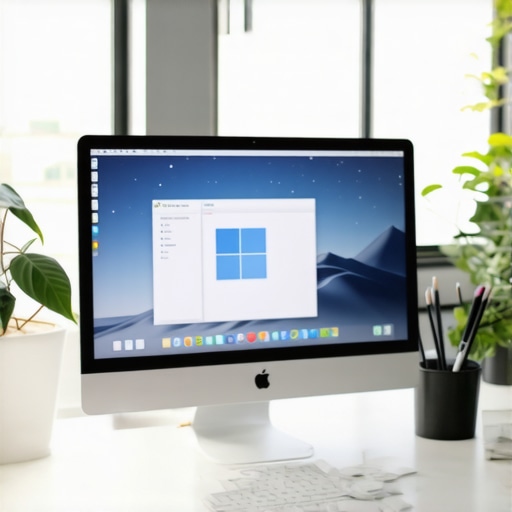
While we live in a world of SaaS and web-based platforms, a significant portion of the global enterprise landscape still runs on Windows-only legacy systems, proprietary CRMs, and specialized data tools. For an agency to be truly agile, it cannot afford to say “we can’t run that.” This is where Parallels Desktop becomes more than just a utility – it becomes a strategic bridge. By allowing macOS users to run Windows 11 seamlessly alongside their native apps, Parallels Desktop ensures that your GTM (Go-To-Market) systems remain frictionless, regardless of the operating system requirements of your clients or your specialized software stack.
In this deep dive, we will explore why modern marketing agencies must leverage virtualization to maintain 100% software compatibility and how this investment protects your operational architecture and revenue streams.
The “Windows-Only” Wall: Why Native Mac Apps Aren’t Enough
Despite the “browser-first” shift in software development, marketing agencies frequently encounter the “Windows-Only” wall. This friction usually occurs at the intersection of deep technical SEO, data science, and enterprise-level client integration. For example, while many SEO tools are cloud-based, several powerful legacy SEO audit tools and custom database scrapers are built exclusively for the .NET framework, making them native to Windows.
When your agency is tasked with a deep-dive technical audit, relying solely on web-based tools can lead to gaps in data. This is a critical failure point. As we’ve discussed previously, why most SEO tools for agencies fail to measure true search intent often comes down to the limitations of the software being used. If your team is restricted to Mac-only versions of software, you might be missing out on robust, Windows-exclusive crawlers that offer deeper granularity into server-side headers or complex JavaScript rendering issues.
Furthermore, many large-scale enterprise clients utilize proprietary CRM extensions or financial reporting tools that have never been ported to macOS. If your RevOps team needs to integrate directly with a client’s specialized Windows environment to track lead attribution or manage a complex GTM system, a MacBook alone won’t cut it. Parallels Desktop removes this barrier, allowing your team to run Windows-only software for marketers without the need for a secondary, clunky PC laptop cluttering the desk. It ensures that your operational workflow is dictated by strategy, not by software limitations.
Virtualization vs. Dual-Booting: The Parallels Advantage for M-Series Macs
In the past, the solution to running Windows on a Mac was Apple’s “Boot Camp.” However, Boot Camp required a full restart to switch operating systems, which is a massive productivity killer in a fast-paced agency. With the advent of Apple Silicon, Boot Camp is a thing of the past. For the modern M1, M2, or M3 MacBook Windows virtualization is the only viable path forward, and Parallels Desktop is the gold standard in this category.
The release of Parallels Desktop 19.3.0 brought significant optimizations for Windows 11 on ARM. This means that your Windows environment isn’t just “running” – it is flying. On an M3 Max chip, the performance of a Windows virtual machine often rivals or exceeds that of native high-end Windows laptops. For a marketing agency, the “Coherence Mode” in Parallels is the “killer feature.” It allows you to run Windows applications as if they were native Mac apps. You can have your Windows-only SEO crawler sitting in your Mac Dock right next to Adobe Creative Cloud and Slack. You can drag and drop files between a Windows folder and a Mac folder with zero friction.
This level of integration is vital for maintaining a clean GTM system. When your operations team can jump between a Windows-based database and a Mac-based visualization tool in seconds, the speed of insight increases. You are no longer managing two separate computers; you are managing one unified, high-performance workstation that happens to be OS-agnostic.
Protecting the Hybrid Ecosystem: Hardware and Support
Operational efficiency isn’t just about software; it’s about the physical infrastructure that supports your team. In a hybrid agency environment where team members move between home offices, client sites, and the main hub, hardware protection is paramount. When your staff is handling a mix of devices – perhaps a primary MacBook for design and a Surface for on-site client testing – the risk of damage increases.
Every agency professional knows the stress of a client presentation. If you’re using a tablet for a pitch, a rugged apple ipad case is a non-negotiable insurance policy against a shattered screen during a high-stakes meeting. Similarly, for those moments when you are testing Windows-specific touch interfaces, ensuring you have a dedicated charger microsoft surface pro in your kit prevents the “dead battery” nightmare that can derail a project.
From a Marketing Operations perspective, we must look at hardware as a long-term asset. This is why many agencies invest in comprehensive protection plans like Safeware or Dell ProSupport Plus. These aren’t just “warranties”; they are business continuity plans. If a lead strategist’s laptop fails, you need a replacement or a repair immediately to keep the GTM engine running. By pairing the software flexibility of Parallels Desktop with a robust hardware protection strategy, you create a resilient environment that can handle the rigors of agency life.
Data Integrity and Recovery in a Virtualized Environment
One of the risks of virtualization that often goes unmentioned is the complexity of the virtual disk file. In Parallels, your entire Windows OS and all its data live within a single .pvm file. If that file becomes corrupted or the physical SSD fails, you lose everything in that environment. This is a nightmare scenario for an agency managing months of client data or complex AI-powered workflows.
In my experience, you must have a “break glass in case of emergency” plan. While standard cloud backups are essential, they sometimes fail to capture the state of a running virtual machine correctly. If a catastrophic hardware failure occurs, companies like Drive Savers are the industry standard for data recovery. They have the specialized expertise to extract data from encrypted SSDs and corrupted virtual disk formats that standard IT departments simply can’t handle.
Data integrity is the foundation of trust between an agency and its clients. If you are hiding behind meaningless metrics because your actual data was lost in a VM crash, your client relationships will sour quickly. Operational excellence requires not just the ability to run any software via Parallels, but the foresight to protect the data that software generates.
Real-World Use Cases: From SEO Audits to GTM Systems
Let’s look at a practical application. Imagine your agency is building an AI-powered lead management workflow for a client in the manufacturing sector. Their legacy ERP (Enterprise Resource Planning) system only exports data in a format that requires a specific Windows-only middleware to process. Without Parallels Desktop, your team is stuck using a “burner” PC in the corner of the office, or worse, manually entering data.
With Parallels, your RevOps lead can run that middleware natively on their Mac, feed the data into an AI model, and push the results to a Mac-based dashboard in real-time. This is what I call the GOOD BULL approach to technology – no fluff, no excuses, just getting the job done with the best tools available. It’s about being “OS-fluid.”
Another use case is cross-browser and cross-platform testing. Even though Chrome is ubiquitous, Windows-based Edge rendering can still vary, especially for complex B2B portals. An agency that can test a new landing page simultaneously on macOS and a virtualized Windows 11 environment ensures a better user experience. This attention to detail is what differentiates a high-end agency from a budget provider. If you want to scale, you need to master distribution channels that actually drive B2B leads, and that requires ensuring those channels work perfectly on the OS your clients actually use.
Managing Client Assets: Cases and Peripherals
Operational strategy often comes down to the small details. When an agency handles client-provided hardware – common in long-term embedded contracts – the responsibility for that hardware is absolute. If a client sends over a Surface Pro for your team to use for internal testing of their proprietary software, you don’t just leave it on a desk. You protect it with a high-quality case for surface pro.
This might seem like a minor point, but in Marketing Operations, we think in terms of risk mitigation. A broken client device is a professional embarrassment and a sign of operational sloppiness. By treating client assets with the same rigor as our own – utilizing proper cases, chargers, and support plans – we signal a level of professionalism that justifies premium agency fees. Parallels Desktop allows us to integrate the *software* of these devices into our workflow, but we must still respect the *hardware*.
Conclusion: Building a Frictionless Agency Tech Stack
The goal of any Director of Marketing Operations is to remove friction. Friction slows down campaigns, frustrates talented creatives, and ultimately eats into the agency’s margin. Parallels Desktop is a strategic investment that removes the OS-compatibility friction once and for all. It allows your agency to stay firmly planted in the Mac ecosystem that your team loves, while remaining 100% compatible with the Windows world where your clients live.
Whether it’s running specialized SEO tools, managing enterprise CRMs, or ensuring that your GTM systems are robust across all platforms, virtualization is the key. When you combine this software flexibility with a “Good Bull” approach to hardware protection – using everything from an apple ipad case to Dell ProSupport Plus and Drive Savers – you build an agency that is prepared for any technical challenge.
Don’t let an operating system define your agency’s capabilities. Audit your current software “walls” today. If there is a tool you aren’t using, or a client you are struggling to integrate with because of a Mac-Windows divide, it’s time to implement Parallels Desktop. It’s not just about running Windows; it’s about running your agency at the highest possible level of operational efficiency.