Why Your Branson Hardscaping Quote is Probably Missing These 3 Critical Ozark Drainage Tactics
Why Your Branson Hardscaping Quote is Probably Missing These 3 Critical Ozark Drainage Tactics
The Ozarks offer some of the most breathtaking views in the Midwest – rolling hills, limestone bluffs, and the deep greens of the Mark Twain National Forest. But if you are a homeowner in Taney or Stone County, you know that this beauty comes with a literal “hard” reality. When it comes to branson landscaping, the very terrain that makes our region iconic is also the number one enemy of your outdoor living space. As the owner of Nature Envy, I have spent years navigating the Springfield-Branson corridor, and I’ve seen far too many beautiful patios and retaining walls become expensive piles of rubble after a single season of Ozark rainfall.
When you receive a branson hardscaping quote, it’s easy to get distracted by the choice of pavers, the height of the fire pit, or the built-in kitchen. However, if your contractor isn’t talking about the invisible engineering beneath the surface, you aren’t buying a patio – you’re buying a future liability. In our region, water management isn’t a “nice-to-have” feature; it is the foundation of the project. If your quote doesn’t explicitly detail how it will handle the unique hydrological pressures of our local soil, it’s missing the three most critical tactics required for longevity in the Ozarks.
The “Ozark Tax”: Why Standard Hardscaping Fails in Branson
In many parts of the country, landscaping is a matter of moving some dirt and laying some stone. In Branson, we deal with what I call the “Ozark Tax.” This is the extra cost and effort required to combat our unique geological profile. Our soil is primarily composed of “Ozark Chert” – a flint-like, silica-rich rock embedded in dense, heavy clay. According to the USDA Soil Survey, these clay-heavy soils have extremely low permeability. This means when it rains in the Ozarks, the water doesn’t soak in; it moves horizontally or sits and creates massive hydrostatic pressure.
Standard branson landscaping techniques that work in the sandy soils of Florida or the loamy plains of the Midwest will fail here within 24 months. Without a specific drainage plan, a retaining wall is simply a dam. Eventually, the dam will break. If your contractor’s quote looks suspiciously low, they are likely ignoring the “Ozark Tax” by skipping the intensive excavation and drainage infrastructure required to move water through our rocky terrain. You must understand that proper branson landscaping requires more than just aesthetic talent; it requires an understanding of fluid dynamics and geological engineering.
This challenge is similar to other construction sectors where underground conditions dictate success. Just as a contractor might wonder why your excavation business is invisible for high-value emergency sewer line repair searches, a hardscaper who ignores the “invisible” drainage needs of a project will soon find their reputation invisible once the first heavy spring rain hits.
Tactic #1: Sub-Surface Hydrostatic Pressure Relief (Beyond the Basic Weep Hole)
The most common cause of retaining wall failure in Branson is hydrostatic pressure. To understand this, you have to understand the physics of water. Water weighs approximately 62.4 pounds per cubic foot. When the heavy clay behind a wall becomes saturated, that weight is transferred directly to the back of your hardscape. A wall that is 10 feet long and 4 feet high can easily be holding back several tons of additional water weight during a Branson downpour.
Most basic branson hardscaping quotes will mention “weep holes” – those small pipes you see sticking out of the bottom of walls. While necessary, weep holes alone are insufficient for Ozark Chert. The tactic your quote is likely missing is the “Gravel Chimney.”
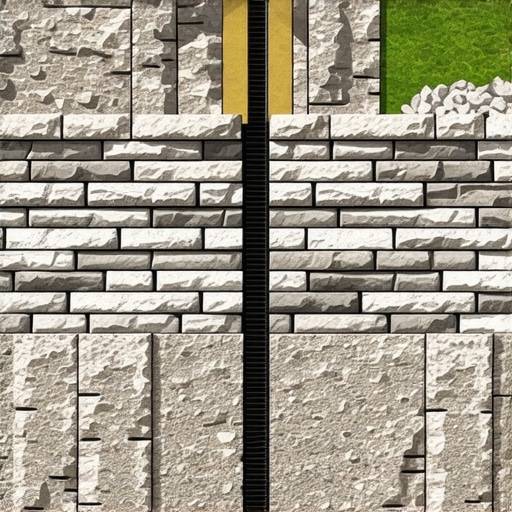
A gravel chimney is a vertical column of 1-inch clean crushed stone (not “dirty” gravel or fill dirt) that runs the entire height of the wall, separated from the native soil by a heavy-duty geotextile fabric. This chimney acts as a high-speed highway for water, allowing it to drop straight down to a perforated base pipe before it can exert pressure on the wall. If your contractor plans to use “dirt fill” behind your wall to save money, they are setting you up for a catastrophic collapse. In the Ozarks, we don’t just want to “drain” the water; we want to “relieve” the pressure before it ever touches the stone.
The stability of these structures is paramount. We often see parallels in other industries; for example, the same way why your Ogden deck foundation might be sagging under new Deckorators railing is often due to ignored load-bearing physics, a retaining wall sags and leans when the “load” of water isn’t accounted for in the initial quote.
Tactic #2: The Strategic Dry Creek Bed (Functional Aesthetics)
In the Ozarks, we don’t just get rain; we get flash floods. Because our rocky soil doesn’t absorb water quickly, runoff can turn a gentle slope into a rushing river in minutes. A common mistake in branson hardscaping is trying to hide drainage pipes or force all water underground into small 4-inch PVC lines. These pipes often clog with debris or simply cannot handle the volume of an Ozark storm.
The second tactic your quote is likely missing is a Strategic Dry Creek Bed. This is a functional drainage ditch disguised as a beautiful landscape feature. By using a combination of large Ozark boulders, river rock, and cobble, we create a designated “overflow” path for water.
As seen in professional demonstrations of “pouring rock for drainage issues,” the key is the layering. You cannot simply throw rock into a trench. It requires a base of non-woven geotextile fabric to prevent the rock from sinking into the clay over time. Then, the rocks must be hand-placed – a process often omitted in cheap quotes – to ensure they don’t “float” or wash away during a surge. According to the University of Missouri Extension, managing runoff through naturalized channels is the most effective way to prevent soil erosion in Missouri’s hilly landscapes. When done correctly, you “watch us turn a muddy trench into a beautiful drainage ditch” that adds value to your property while protecting your patio from being undermined by surface runoff.
Tactic #3: Foundation Shielding and Perimeter Gravel Armor
Many homeowners invest in branson hardscaping to bring a patio right up to the edge of their home. This is where things get dangerous for your foundation. In our region, “hydrostatic heave” can occur when clay soil next to a foundation swells with water, potentially cracking basement walls or causing slabs to shift.
If your quote suggests bringing soil and mulch directly up to your home’s foundation or the edge of your new patio, it’s missing Perimeter Gravel Armor. Research into Missouri home construction suggests that adding gravel around your foundation is significantly better than having soil. Gravel doesn’t hold moisture against your home; it allows it to drop into a perimeter drain system (often called a French Drain).
In a high-quality branson landscaping plan, we install a “shield” of 12-to-18 inches of clean gravel between the hardscape/soil and the foundation. This prevents “capillary rise,” where water is sucked upward into your home’s framing. It also ensures that the heavy water-logged clay isn’t pushing against your home’s footings. If your contractor isn’t planning to excavate a perimeter trench and fill it with armored gravel, they are leaving your home’s structural integrity to chance.
How to Audit Your Branson Landscaping Quote
Based on my years with Nature Envy, I’ve developed a checklist for homeowners. If you are looking at a quote for branson hardscaping right now, look for these 5 red flags. If they are present, your project is at risk of drainage failure.
- No mention of “clean gravel” or “geotextile fabric”: If the quote just says “backfill,” they are using the dirt they dug up. In the Ozarks, that dirt is clay. Clay holds water. Water destroys walls.
- No “Daylight” plan: Ask your contractor, “Where does the water go?” If they don’t have a specific “daylight” point (where the pipes exit to a lower elevation or a dry creek), the water is just pooling under your expensive pavers.
- Low-ball pricing on excavation: Digging in Ozark Chert is slow and expensive. It requires heavy machinery and often specialized teeth for backhoes. If the labor cost for excavation seems too low, they aren’t digging deep enough for a proper drainage base.
- Lack of local flood references: Ask if they have projects that have survived a “50-year flood” event in Branson. We get “100-year floods” every five years here; your contractor needs to have seen their work survive a Table Rock Lake area deluge.
- Absence of a site-specific elevation map: You cannot guess drainage in the Ozarks. A professional quote should be based on a laser-level reading of your property’s elevations to ensure water moves away from structures.
Conclusion: Don’t Let Your Investment Wash Away
Investing in branson landscaping is one of the best ways to increase your property value and enjoy the natural beauty of our region. However, the Ozarks are unforgiving to those who ignore the laws of physics. A beautiful patio that sinks, or a retaining wall that leans after two years, is a heartbreak that can be avoided with the right technical approach.
Before you sign a contract for branson hardscaping, sit down with your contractor and ask the hard questions. Ask about hydrostatic pressure. Ask about soil saturation. Ask about the “Ozark Tax.” If they can’t explain their drainage tactics with the same passion they use to describe the stone colors, they aren’t the right partner for your project. Don’t let your investment wash down the hillside – ensure your quote includes the sub-surface engineering required to stand the test of time in our rugged Ozark home.