Why Your Las Vegas 3PL Logistics Firm is Losing High-Value Industrial Leads to National Crating Specialists
Why Your Las Vegas 3PL Logistics Firm is Losing High-Value Industrial Leads to National Crating Specialists
In the competitive landscape of Southern Nevada’s supply chain, the divide between a standard warehouse and a specialized logistics powerhouse is widening. If you operate a 3pl logistics firm in Las Vegas, you’ve likely noticed a frustrating trend: while your bays are full of high-volume, low-margin “pick-and-pack” retail goods, the high-value industrial contracts – the ones involving six-figure CNC machines, delicate aerospace components, or priceless gallery collections – are bypassing your facility entirely.
The reality is stark. Research into the local market suggests that nearly 95% of standard 3PLs in the region reject complex micro-receiving or specialized packaging requests because they lack the technical infrastructure to handle them. When a lead comes in for a project that requires more than a standard pallet and some stretch wrap, most generalists are forced to say “no.” By the time you’ve referred that lead elsewhere, you’ve lost a high-margin opportunity. To stop the bleed, you must understand the gap between commodity shipping and engineered crate and ship solutions.
The “Generalist” Trap: Why Standard Warehousing Falls Short
For many providers, las vegas warehousing has become a commodity. In a city where square footage is traded like a currency, many 3PLs focus solely on density and throughput. However, industrial manufacturers, medical technology firms, and casino operations managers aren’t looking for just a shelf; they are looking for risk mitigation.
A generalist 3PL is designed for uniformity. They excel when every box is the same size and every pallet fits a standard rack. But high-value industrial leads are rarely uniform. When a client needs to store and eventually transport a 15,000-pound industrial turbine or a sensitive MRI machine, the standard las vegas warehousing model breaks down. These clients require specialized floor loading capacities, heavy-duty forklifts, and, most importantly, a team that understands the physics of bracing and blocking.
Standard 3PLs often lack the specialized equipment for “difficult-to-ship” items. Without overhead cranes or 30,000-lb capacity lifts, you are physically incapable of servicing the most profitable leads in the industrial sector. Furthermore, the insurance requirements for handling high-value machinery are significantly higher than for consumer electronics. If your firm hasn’t invested in the specialized training and coverage required for heavy-lift projects, savvy industrial leads will sniff that out during the RFP process and move to a specialist.
Custom Engineering vs. Off-the-Shelf Pallets
One of the primary reasons 3PLs lose industrial leads is the lack of in-house crating expertise. There is a massive technical gulf between a standard heat-treated skid and custom built crates. Industrial shipping is an engineering discipline. It involves calculating center of gravity, identifying vibration-sensitive components, and applying the correct cushioning coefficients.
When we talk about high-value freight, we are talking about sophisticated protection. This includes:
- Shock and Vibration Isolation: Utilizing specialized foam densities or skid mate cushions to protect internal electronics.
- Vapor Barrier Packaging: For international ocean freight, standard plastic won’t suffice. Industrial leads require vacuum-sealed Mylar bags with desiccant to prevent salt-air corrosion.
- Internal Bracing: Using hardwood cleats and steel strapping to ensure a machine doesn’t shift an inch during a 3,000-mile journey.
Furthermore, there is the matter of compliance. For international shipping companies, ISPM-15 certification is non-negotiable. If your facility is using non-heat-treated lumber or lacks the official IPPC stamp, your client’s high-value cargo could be quarantined or destroyed at an international port. Specialized crating firms built on the legacy of established names like box brothers las vegas understand these nuances. If a 3PL cannot guarantee ISPM-15 compliance on-site, they are essentially disqualified from the global industrial market.
The On-Site Advantage: Why Clients Choose “Crating Near Me”
In the world of heavy machinery and industrial plant relocations, the cargo often cannot come to the warehouse. A 20-ton press or a delicate clean-room assembly line cannot be moved across town on an open flatbed without protection. This is where the “on-site” advantage becomes a deal-breaker.
High-value leads look for a crating company that can deploy a mobile team to their facility. These experts arrive with pre-cut lumber, pneumatic tools, and heavy-duty shrink wrapping services near me to secure the asset before it ever touches a truck. This “point-of-origin” protection is a massive differentiator.
If your 3PL model requires the client to figure out how to get the item to you safely, you’ve already lost the lead. Industrial clients want a single point of accountability. They want the crating company near me to handle the rigging, the packing, and the transport. By offering on-site services, specialized firms reduce the risk of preliminary transport damage – a common insurance nightmare for general 3PLs. This level of service is why many providers are failing to capture high-value calls, much like how a poorly optimized digital strategy might fail to capture local map calls in other industries. The physical presence and immediate capability are what convert the lead.
Beyond the Box: Shrink Wrapping and Art Courier Services
To win the most lucrative contracts in Las Vegas, you have to look beyond the wooden box. The “niche” services that many 3PLs ignore are actually the strongest lead magnets in the industrial and luxury sectors. Consider the demand for shrink wrapping services near me. This isn’t the thin film used for grocery pallets; it’s 10-mil, UV-inhibited industrial wrap used to mothball machinery or protect oversized loads on flatbeds. It is a technical skill that requires heat-induction tools and an understanding of ventilation to prevent “sweating” and rust.
Then there is the fine art and exhibition market. Las Vegas is a global hub for trade shows and high-end gallery installations. Standard freight services are insufficient for these clients. They require art couriers who understand climate control, white-glove handling, and “last-mile” installation.
Take, for example, the handling of the Leonardo Da Vinci Exhibit. When Las Vegas Crating managed this project, it wasn’t just about moving crates; it was about managing a multi-million dollar cultural asset. This required the expertise of specialized artwork shipping companies that could provide custom-fit interiors and shock-monitoring logistics. When a 3PL can demonstrate this level of expertise, they move from being a vendor to a strategic partner. If your firm can’t speak the language of “archival-safe materials” or “non-reactive foams,” the art world and the high-end exhibit industry will look elsewhere.
Logistics Infrastructure: Cross-Docking and LTL Shipping
While specialized packing is the hook, the underlying logistics infrastructure must be flawless to retain the client. High-value industrial leads often involve complex shipping schedules where timing is as critical as safety. This is where cross dock facilities play a vital role.
In many industrial scenarios, cargo arrives from overseas and needs to be de-consolidated, inspected, crated, and then immediately sent back out via ltl shipping (Less-Than-Truckload) or full truckload to various sites. A 3PL that can seamlessly integrate crating within its cross-docking workflow has a massive competitive edge.
Efficiency in ltl shipping for industrial goods requires more than just booking a carrier. It involves:
- Freight Class Optimization: Ensuring the custom crate dimensions and weights are accurately reported to avoid massive re-class fees.
- Carrier Selection: Choosing carriers that have experience with “over-dimensional” or “high-value” freight, rather than just the cheapest option.
- Real-Time Tracking: Providing the client with transparency from the moment the item is crated until it reaches its final destination.
By combining high-end commercial freight services with custom packaging, a firm becomes a “one-stop-shop.” The industrial lead isn’t just buying a crate; they are buying the peace of mind that their $500,000 asset is being handled by one team from start to finish.
The Physics of Heavy-Lift Logistics
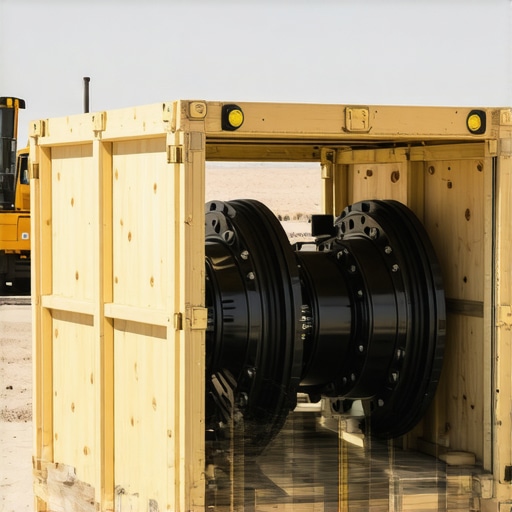
To truly understand why 3PLs lose these leads, one must look at the technical requirements of heavy-lift projects. A standard pallet is designed to hold about 2,500 lbs. An industrial crate might be required to hold 40,000 lbs. This requires a deep knowledge of timber engineering.
At Las Vegas Crating and Logistics, we often see 3PLs try to “wing it” with standard 2×4 construction, only to have the base of the crate collapse under the weight of a heavy industrial lathe. Specialized custom crating services utilize 4×4 or 6×6 pressure-treated skids, through-bolts instead of nails, and steel reinforcement where necessary. We also consider the “unboxing” experience. An industrial lead wants a crate that is easy to open and, in many cases, reusable for future trade shows. If your 3PL doesn’t offer “easy-access” panels or reusable bolt-down designs, you aren’t meeting the needs of the modern industrial client.
Furthermore, the environmental factors in the Mojave Desert cannot be ignored. Las vegas warehousing presents unique challenges, specifically extreme heat and low humidity, which can warp low-quality wood or affect the integrity of certain adhesives and foams. A specialized firm with over 25 years of experience knows which materials will stand up to the Nevada sun and which will fail, ensuring that the protection holds up from the warehouse floor to the destination.
Conclusion: How to Reclaim Your Local Leads
The “commodity” era of 3PL logistics is being challenged by the need for specialized, engineered solutions. If your Las Vegas firm is losing high-value industrial leads, it is likely because there is a perceived – or actual – gap in your ability to handle complex packaging and heavy-lift requirements.
To win in this market, you have two choices: build a specialized crating division from the ground up – which requires significant investment in equipment, ISPM-15 certification, and skilled labor – or partner with a crating service that already has the 25+ years of experience and infrastructure to handle the job.
By bridging the gap between standard warehousing and custom engineering, you can stop rejecting complex leads and start capturing the high-margin contracts that define the top tier of the logistics industry. Whether it’s a piece of sensitive medical equipment or a massive trade show exhibit, the client’s goal is always the same: safe, compliant, and efficient transport. If you can provide that through specialized crating, you will reclaim your position as a leader in the Las Vegas market.
Don’t let another high-value lead slip through your fingers because of a lack of specialized packaging. If you are ready to elevate your logistics game or need a reliable partner for your most complex freight, contact the experts who have set the standard for 3pl logistics and industrial crating in Nevada for over two decades.