Why Your GMB Ranking Tool Is Generating Impressions But Zero Local Calls
Why Your GMB Ranking Tool Is Generating Impressions But Zero Local Calls
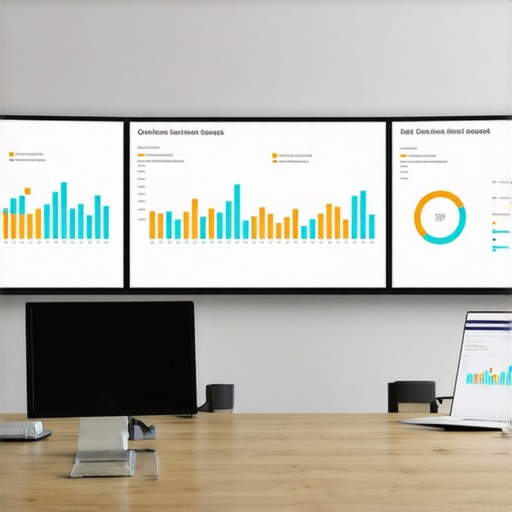
There is a specific kind of frustration reserved for the modern agency owner: opening your reporting dashboard to find a sea of green. Your gmb ranking tool shows your client is sitting comfortably in the top three positions for their primary keywords. The “green grid” is glowing, and the impression count is ticking upward. Yet, when you get on a monthly strategy call with the client, the feedback is chilling: “The phones aren’t ringing, Eean. We’re getting zero leads.”
As the Co-Founder of Agency Assassin, I have seen this scenario play out hundreds of times. We call it the “Ghost Ranking” phenomenon. It is the gap between technical visibility and actual human intent. If your rankings aren’t triggering user actions, they are nothing more than a vanity metric. Take, for example, a recent case highlighted on the Local Search Forum: a business owner with over 50 genuine 5-star reviews and top-tier rankings in a competitive niche was only receiving one or two calls per month. This isn’t just an anomaly; it is a systemic failure of how we measure and execute local SEO in an era of hyper-intelligent algorithms.
In this deep dive, we will explore why your current gmb ranking tool might be lying to you, how low-quality automation is poisoning your data, and what you must do to turn those “ghost impressions” into high-intent inbound calls.
The “Ghost Ranking” Phenomenon: When Impressions Lie
The first thing we have to address is the source of your data. Most seo tools for agencies operate by sending automated pings to Google’s servers to scrape search results. While this is necessary for tracking, these very pings often contribute to a skewed perception of “visibility.” If an agency is running daily audits across a 10×10 grid for twenty different keywords, that generates thousands of “impressions” that have zero chance of converting because they were generated by a bot.
However, the problem goes deeper than just bot-inflated metrics. A “Ghost Ranking” occurs when your listing appears in the Map Pack, but Google’s algorithm has flagged the traffic patterns associated with that listing as suspicious or low-value. In these instances, Google might show your business to fill a slot, but it won’t prioritize you in high-stakes, “near me” searches where the user has a high probability of clicking the call button.
We must differentiate between “Rankings” and “Visibility to High-Intent Humans.” A high-intent human search is characterized by specific behavioral markers: a history of local movement, a logged-in Google account with a real search history, and a device that behaves like a physical object in space. If your rankings are built on the back of Why Your Current Local SEO Automation Is Generating Clicks But Zero Real Phone Calls, you are essentially building a house on sand. Google’s AI is now sophisticated enough to ignore the “noise” generated by low-quality tools while rewarding listings that show genuine human engagement.
The CTR Manipulation Trap: Why Your Software Might Be Sabotaging You
Click-Through Rate (CTR) is arguably the most powerful lever in the local algorithm today. At Agency Assassin, our data indicates that a mere 1% increase in legitimate CTR can correlate to a 30% boost in organic traffic. This has led to a gold rush in the market for any ctr manipulation tool that promises quick results. But here is the catch: not all clicks are created equal.
Many agencies fall into the trap of using a generic ctr manipulation tool that utilizes a “headless browser” or a static proxy network. These bots perform a search, find the listing, and click. To a basic tracker, this looks like success. To Google’s SpamBrain AI, it looks like a red flag. Real human behavior is erratic. Humans scroll, they pause to read reviews, they look at photos, and they check the “About” section before they ever think about clicking “Call.”
When you use ctr manipulation software that lacks behavioral sophistication, you create “hollow” traffic. Google sees the clicks, and it may even temporarily bump your rankings, but it notices the lack of “downstream” signals. If 100 people click your listing but zero people stay on the page for more than three seconds, Google concludes that your business is not relevant to the query. This is a primary reason why you might see a “green grid” but experience a total lack of lead flow. You are essentially teaching the algorithm that while people “click” on you, they don’t actually “want” you. This is a dangerous precedent to set for a local brand.
The “Live Drive” Dilemma: Why Fake Directions Don’t Equal Real Customers
One of the most talked-about signals in local SEO is the “Request Directions” button. This has given rise to the Live Drive strategy, where tools simulate a user asking for directions to a business location. On paper, this is a brilliant signal. It tells Google that a user is so interested in a business that they intend to physically visit it.
However, as we move into 2026, Google’s ability to verify these signals has reached a new peak. The “Live Drive” dilemma occurs when a gmb ranking tool triggers a direction request, but the associated mobile device (the “entity”) never actually moves. Google Maps is integrated into the Android and iOS ecosystems at a kernel level. If Google sees 50 direction requests for a plumber in Denver, but zero GPS coordinates actually move toward that plumber’s service area, the signal is devalued or, worse, flagged as manipulation.
Furthermore, Why Your Live Drive Backlink Strategy Often Fails to Pass the Google Information Gain Test is a concept every agency needs to understand. If your “Live Drive” signals are coming from the same IP ranges or lack the “Information Gain” of a real user journey – meaning the user didn’t perform any other related searches or actions typical of someone needing that service – Google’s AI simply filters them out. You might keep your rank, but you lose the “Trust Score” that triggers the most valuable “near me” impressions.
2026 Local SEO Reality: AI Packs and the Vanishing Call
The landscape of local search is undergoing a tectonic shift. By 2026, “AI Packs” are expected to replace traditional Map Packs for a significant portion of high-intent queries. In this new reality, Google isn’t just listing three businesses; it is providing a synthesized overview of why a user should choose a specific business based on reviews, local justifications, and real-time availability.
This evolution is leading to the “Vanishing Call.” We are seeing cases where rankings remain steady, yet calls drop because Google is answering the user’s query directly in the Search Engine Results Page (SERP). If your listing doesn’t provide what we call “Information Gain” – new, unique, and valuable information that the AI can’t just scrape from your basic profile – you become invisible even when you are at the top.
Consider the case of a business in Lucknow that had 19 5-star reviews and was perfectly “optimized” for the “Marketing” category. Despite being in the top three, they received zero calls. Why? Because their profile was a carbon copy of every other competitor. There was no “Behavioral Magnet” to pull the user from the SERP into a phone call. When you rely solely on a gmb ranking tool to tell you if you are winning, you miss the qualitative data that actually drives conversions. In 2026, if your content doesn’t demonstrate expertise and unique local authority, the AI will summarize you into obsolescence.
How to Bridge the Gap: From Impressions to Inbound Leads
So, how do we fix this? How do we move from vanity metrics to actual ROI? The answer lies in shifting your focus from “pings” to “patterns.” You need to stop chasing raw clicks and start engineering high-intent organic traffic.
To bridge the gap, you must use a sophisticated ctr manipulation software that focuses on the entire user journey. This means simulating the “pre-click” behavior (searching for related terms), the “click” itself, and the “post-click” engagement (scrolling, clicking through to the website, and dwell time). At Agency Assassin, we emphasize “Systematic, Scalable Local SEO.” This isn’t about tricking the algorithm for a week; it’s about providing the algorithm with the consistent, high-fidelity data points it needs to trust your business.
As I often tell our partners, “You cannot win a high-stakes game with low-stakes tools.” If you are using How Using a Generic CTR Manipulation Tool Can Actually Devalue Your High-Intent Organic Traffic, you are actively hurting your client’s long-term viability. High-intent traffic requires a diversity of IP addresses, residential proxies, and most importantly, varied behavioral scripts that mimic the messy, non-linear way that real humans actually search for local services.
Actionable Steps for Agencies:
- Audit Your Impressions: Use Search Console to see if your impressions are coming from “Map Embeds” or “Direct Searches.” If your impressions are high but “Search Queries” are low, your gmb ranking tool is likely picking up bot noise.
- Focus on Engagement Signals: Encourage clients to post “Google Updates” (formerly Posts) that require a click to read. This creates a legitimate engagement signal that bots rarely mimic.
- Optimize for “Information Gain”: Ensure your GMB description and website content contain local insights that aren’t found on your competitors’ pages. Mention specific local landmarks, neighborhood names, and unique service processes.
- Use High-Fidelity Automation: If you use CTR tools, ensure they incorporate Live Drive signals that are backed by realistic mobile footprints and varied dwell times.
Conclusion: Auditing Your Toolset for Real ROI
At the end of the day, your clients don’t pay you for green squares on a ranking grid; they pay you for the growth of their business. If your gmb ranking tool is showing success while the client’s CRM is showing a drought, it is time to audit your toolset. The “Ghost Ranking” phenomenon is a symptom of an industry that has become too reliant on shallow metrics and low-quality automation.
The future of local SEO belongs to those who can provide Google with “Human-Centric Signals.” Whether it is through legitimate Live Drive patterns or high-fidelity ctr manipulation software, the goal is the same: to prove to the algorithm that your business is the most relevant, trusted, and sought-after option in the local area. Stop chasing vanity impressions. Start building a systematic, scalable engine that drives real-world actions. If your current strategy isn’t resulting in phone calls, it isn’t a strategy – it’s just a report.