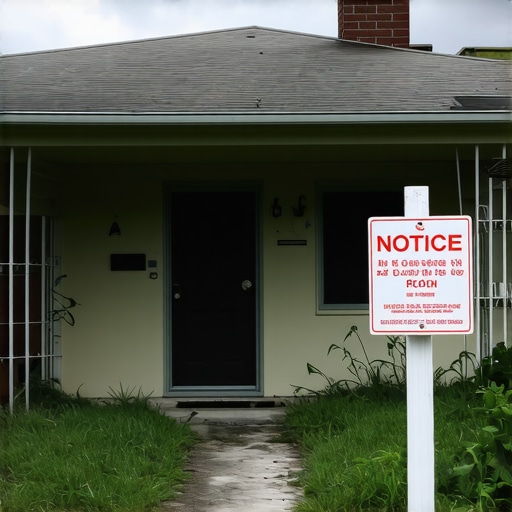
Why Most Miami Foreclosure Defense Strategies Fail to Stop Bank Auctions
Why Most Miami Foreclosure Defense Strategies Fail to Stop Bank Auctions
Receiving a foreclosure summons in Miami-Dade County is a harrowing experience that sends a shockwave through any household. For many homeowners, the immediate reaction is to seek out a way to fight back, often turning to traditional legal defenses to save their property. My name is Peter White, and as an expert in foreclosure and bankruptcy law, I have seen thousands of homeowners navigate this treacherous path. While the instinct to fight is correct, there is a harsh reality that many legal practitioners fail to emphasize: traditional foreclosure defense strategies, while useful for buying time, often fail to stop the bank auction once the legal clock runs out.
The central thesis of this discussion is critical for any South Florida resident currently facing a sale date. While challenging a bank’s standing or document verification is a valid part of a comprehensive strategy, these methods are frequently insufficient to prevent a Final Judgment. In many cases, the only ironclad legal mechanism capable of stopping a bank auction at the eleventh hour is the “Automatic Stay” provided by a federal bankruptcy filing. Understanding the limitations of Why Most Miami Foreclosure Defense Strategies Fail to Stop Bank Auctions is the first step in truly protecting your home and your financial future.
The Reality of the Florida Judicial Foreclosure Process
Florida is a judicial foreclosure state. This is a double-edged sword for homeowners. On one hand, it means a lender cannot simply seize your property; they must sue you in a court of law and prove their right to foreclose. This process typically begins with a Lis Pendens, followed by a formal summons and complaint. Because it is a court-managed process, it inherently takes longer than non-judicial foreclosures seen in other states, providing a window of opportunity for the homeowner.
However, the current market dynamics in 2025 and 2026 have changed the behavior of lenders. Florida home prices have hit record highs, and while the luxury market continues to see headline-grabbing sales – such as $24.5 million mansions in Coral Gables – the average homeowner is feeling the squeeze of inflation and rising insurance costs. Because property values are high, banks are more aggressive than ever. They know that if they can push a property to auction, they are likely to recoup their entire investment and then some. This high-equity environment means lenders are less likely to settle and more likely to push for a Final Judgment and a quick auction date.
Once a judge signs a Final Judgment of Foreclosure, the auction date is typically set for 30 to 45 days out. At this stage, the window for a foreclosure defense attorney Miami to utilize standard procedural defenses is rapidly closing. Without a significant legal intervention, the transition from “defending a lawsuit” to “losing the home” happens with startling speed.
Why Common Defenses Often Fall Short
Many homeowners are led to believe that “technicalities” will save their homes. You may have heard of strategies like “challenging standing,” “lack of original note,” or “improper service of process.” While these are legitimate legal arguments, they are often misunderstood by the public as permanent solutions. In reality, they are often mere delay tactics.
A debt defense attorney may argue that the bank cannot prove it owns the mortgage because the paperwork was lost during a series of bank mergers. For years, this was a potent defense. However, Florida courts have become increasingly sophisticated and strict. Judges now frequently allow banks to proceed if they can provide a “lost note affidavit” and secondary evidence of the debt. If the bank can show a clear chain of assignments, the “standing” defense often collapses before trial.
The “Trap” of Foreclosure Defense:
Homeowners often spend thousands of dollars on litigation, successfully delaying a sale for a year or more. But delay is not the same as a resolution. If the homeowner cannot bring the loan current or negotiate a permanent restructure, the judge will eventually lose patience. In Miami-Dade courts, if a homeowner moves to cancel a sale just days before the auction without a viable, documented path to payment (such as a signed contract for sale or a firm loan modification approval), the motion is almost always denied. This leaves the homeowner with no remaining defenses in state court and an auction scheduled for the following morning.
The “Loan Modification” Mirage
One of the most common reasons a debt settlement attorney is sought is to facilitate a loan modification. On paper, this is the ideal solution: the bank rolls the arrears into the back of the loan, and the homeowner receives a manageable monthly payment. However, there is a predatory practice known as “Dual Tracking” that continues to plague the industry.
Dual tracking occurs when a bank’s loss mitigation department tells the homeowner they are “reviewing the application,” while the bank’s legal department continues to push for an auction date in court. Homeowners often fall into a false sense of security, believing that as long as they are “in review,” the house cannot be sold. This is a dangerous misconception. Unless there is a court order specifically staying the sale, the auction will proceed regardless of whether a loan modification is pending. By the time the homeowner realizes the modification was denied or the bank isn’t stopping the sale, it is often too late for traditional defense to work. This is why relying solely on the bank’s “good faith” is a strategy that frequently ends in a lost home.
When Defense Fails: The Power of the Automatic Stay
When the state court defenses have been exhausted and the auction is 24 to 48 hours away, the legal landscape must shift from state court to federal court. This is where the services of a filing for bankruptcy lawyer become the most powerful tool in a homeowner’s arsenal. At stibermanlaw.com, we emphasize that bankruptcy is not a sign of failure, but a strategic legal shield.
Under Section 362 of the U.S. Bankruptcy Code, the moment a bankruptcy petition is filed, an “Automatic Stay” goes into effect. This stay is a federal injunction that legally mandates all collection activities – including foreclosure auctions – to stop immediately. It does not matter if the auction is scheduled for ten minutes from now; once the case is filed and the bank is notified, they are legally barred from proceeding with the sale.
If you are looking for a local attorney for bankruptcy, it is vital to understand that this stay provides the breathing room that state court litigation cannot. While a state court judge has the discretion to deny a motion to stay a sale, the federal Automatic Stay is mandatory and immediate. It forces the bank to come to the table in a venue where the homeowner has significantly more leverage. Choosing the right bankruptcy filing chapter is the next critical decision in this process.
Chapter 7 vs. Chapter 13: Which Miami Homeowners Need
The choice of bankruptcy chapter depends entirely on the homeowner’s goals and financial situation. For those who want to keep their home and catch up on missed payments, Chapter 13 is usually the preferred route.
Chapter 13: The Catch-Up Plan
In a Chapter 13 filing, the homeowner proposes a repayment plan over three to five years. This plan allows you to pay back the mortgage arrears (the “back pay”) over time while maintaining your regular monthly mortgage payments going forward. For small business owners in South Florida, a chapter 13 business bankruptcy can be a lifesaver, protecting both personal and business-related assets from aggressive creditors. It turns a looming auction into a structured, manageable debt repayment schedule.
Chapter 7: The Fresh Start
If the goal is not necessarily to keep the home but to walk away without owing the bank another dime, a bankruptcy chapter 7 liquidation may be the answer. While Chapter 7 does not provide a long-term way to catch up on arrears, it does trigger the Automatic Stay, delaying the sale for several months. More importantly, it wipes out personal liability for the debt. This prevents the bank from pursuing a “deficiency judgment” – a court order requiring you to pay the difference between what the house sold for at auction and what you owed on the mortgage. For those seeking a bankruptcy attorney in broward county or Miami, understanding the nuances between these chapters is the difference between losing everything and starting over with a clean slate.
Protecting More Than Just Your Home: Wage Garnishment and Assets
Foreclosure is rarely an isolated financial event. Often, it is accompanied by credit card debt, medical bills, and other liabilities. If a bank completes a foreclosure and the sale price doesn’t cover the loan, they can sue for the remaining balance. This often leads to the bank attempting to seize other assets or garnish your income.
A wage garnishment attorney florida can help you understand your exemptions, but a bankruptcy filing is often the most comprehensive way to stop garnishments in their tracks. Furthermore, for those involved in more complex financial structures, a bankruptcy corporate attorney may be necessary to navigate the intersection of personal real estate and corporate liability.
In the high-stakes Miami real estate market, banks are not just looking for the house; they are looking for the total value of their investment. If you have other assets or a steady income, you remain a target even after the “keys are handed over.” A proactive legal strategy involves looking past the auction date to ensure your future earnings are protected from the fallout of a foreclosure.
Conclusion: Taking Decisive Action Before the Auction
The failure of most Miami foreclosure defense strategies stems from a lack of a “Plan B.” Homeowners often put all their eggs in the basket of state court litigation, only to find themselves defenseless when a judge finally rules in favor of the bank. While a foreclosure defense attorney Miami can provide essential services in the early stages of a case, you must be prepared to pivot when the auction date nears.
Bankruptcy is the ultimate safety net. It provides a level of protection that no other legal mechanism can match. Whether you are looking for a bankruptcy lawyer kissimmee or a dedicated Miami advocate, the time to act is before the hammer falls. Don’t wait until the day before the auction to explore your options. By combining aggressive foreclosure defense with the strategic power of bankruptcy, you can take control of your financial destiny and protect your home from the bank’s reach.
If you are facing a bank auction and your current strategy is failing, contact stibermanlaw.com today for a consultation. Whether you need a filing for bankruptcy lawyer or a specialist in wage garnishment attorney florida services, professional help is the only way to ensure the auction is stopped and your rights are preserved.