
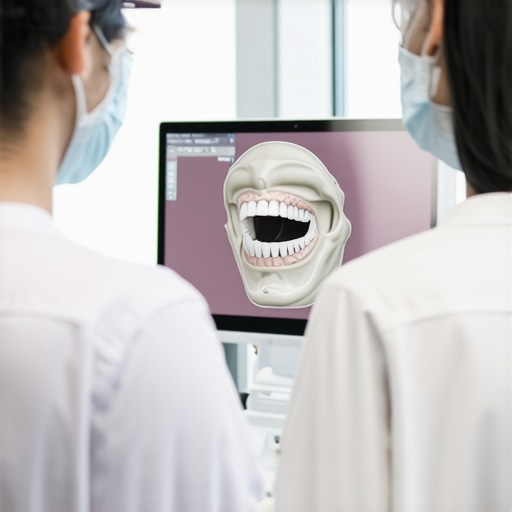
How 3D CBCT Content Can Help Culpeper Dentists Win Local Implant Searches
How 3D CBCT Content Can Help Culpeper Dentists Win Local Implant Searches
In the rapidly evolving landscape of Northern Virginia healthcare, the competition among culpeper va dentists has reached a digital fever pitch. As the town expands along the James Madison Highway corridor and into growing residential pockets, the way patients search for high-stakes procedures – specifically dental implants – has fundamentally changed. No longer do patients simply flip through a phone book; they perform highly specific “near me” searches, looking for the most advanced technology and the highest level of expertise.
For a dentist in culpeper va, standing out in a sea of search results requires more than just a basic website. It requires a demonstration of clinical excellence that translates into search engine visibility. This is where 3D Cone Beam Computed Tomography (CBCT) enters the fray. While CBCT is primarily a diagnostic marvel, it is also a powerful engine for Local SEO. By creating content centered around this technology, practices can signal to both patients and Google that they are the premier destination for complex restorative work.
Top-tier competitors in the region, such as Culpeper Dental Care and All Smiles Dental Care, have already begun to leverage the narrative of “precision technology” to capture the local market. To win the “implant near me” search, a practice must prove it offers the “X-factor” – the gold standard of care that ensures safety, predictability, and superior aesthetic outcomes.
What is CBCT? Beyond the 2D X-Ray
To understand why CBCT is transforming the industry, one must first understand the limitations of traditional dental imaging. For decades, the panoramic X-ray was the industry standard. However, a panoramic image is a 2D representation of a 3D object. It suffers from magnification errors, overlapping structures, and a lack of depth perception.
Cone Beam Computed Tomography (CBCT) is a specialized type of X-ray equipment used when regular dental or facial X-rays are not sufficient. It uses a specific type of technology to generate three-dimensional (3D) images of dental structures, soft tissues, nerve paths, and bone in a single scan. The “Cone Beam” refers to the cone-shaped X-ray beam that rotates around the patient, capturing data that is then reconstructed into a highly detailed 3D volume. This allows for “millimeter precision” by showing the jaw, nerves, and sinuses in three dimensions.
For a patient, this means the oral care dentist can see exactly where the mandibular nerve lies or precisely how much bone volume is available in the sinus floor before a single incision is made. This level of detail is impossible with a flat, two-dimensional film. In the context of a dental care clinic near me, offering this technology is the difference between guessing and knowing.
Why CBCT is the “Gold Standard” for Dental Implants
In my experience as a Dental HR Administrator and Insurance Specialist with a background in Periodontics and Implant Dentistry from Germanna Community College, I have seen firsthand how 3D imaging changes the surgical outcome. When we talk about primary care dentistry, we often focus on cleanings and fillings, but implantology is a surgical discipline that demands a higher level of diagnostic rigor.
The “Gold Standard” designation comes from the ability to perform “restorative-driven implant placement.” Using CBCT data, a dentist can utilize a “surgical guide” – a 3D-printed template that fits over the patient’s teeth or gums during surgery. This guide has a sleeve that perfectly orients the drill and the implant into the bone at the exact angle and depth planned in the software. “Every implant is planned with the precision a flat x-ray simply can’t provide,” ensuring that the final crown sits perfectly in the bite and the implant is anchored in the densest bone available.
From a periodontal perspective, bone density assessment is critical. CBCT allows us to evaluate the quality of the bone (Hounsfield units) to determine if a patient needs a bone graft before the implant can be placed. This prevents the “implant failure” scenarios that often haunt patients researching their options. When a practice provides dentistry services backed by this technology, they are offering a promise of longevity and safety.
The SEO Advantage: Winning the “Implant Near Me” Search
How does a piece of medical equipment help you rank on Google? It comes down to “equipment-based content” and Local SEO signals. When a potential patient in Culpeper searches for “best dentistry” or “dental care clinic near me,” Google’s algorithm isn’t just looking for those keywords; it’s looking for “entities” and “signals” that indicate a high level of service.
By creating dedicated pages and blog posts about CBCT, you are feeding the search engine specific technical data that categorizes your practice as a specialized implant center. This is vital for appearing in the “Google 3-Pack” – the map results that appear at the top of the search page. If your website mentions “3D imaging,” “guided surgery,” and “CBCT scans,” and your competitors only mention “X-rays,” Google recognizes your practice as more relevant for high-intent searches like “dental implants Culpeper.”
However, many practices struggle with their digital presence. As discussed in our analysis of Why Your GMB Ranking Software Is Failing to Produce Real Map Calls, simply having the keywords isn’t enough. You need to demonstrate authority. High-quality, human-verified content about your technology builds the E-E-A-T (Experience, Expertise, Authoritativeness, and Trustworthiness) that Google requires for medical rankings in 2026. Specialized content about CBCT serves as a “trust signal” that differentiates you from a general culpeper dentist.
Patient Trust and the “Safety” Narrative
One of the biggest hurdles in implant dentistry is patient fear. Patients are often concerned about radiation, the invasiveness of the procedure, and whether their insurance will cover the costs. Addressing these concerns through the lens of CBCT technology can significantly increase case acceptance.
Is it Safe?
Modern CBCT machines used in dental preventive care services and specialized diagnostics are designed with “ALARA” (As Low As Reasonably Achievable) principles. The radiation dose is significantly lower than a medical CT scan while providing much higher resolution for the dental structures. Explaining “what to expect on scan day” – a quick, non-invasive, 20-second rotation around the head – helps demystify the process for the anxious patient.
The Insurance Angle
As a Dental Insurance Specialist, I know that getting a “yes” from an insurance provider for complex cases can be difficult. 3D scans provide the “irrefutable evidence” needed for claim documentation. When we submit a claim for a bone graft or a complex implant, having a 3D slice that clearly shows the lack of bone height or the proximity to the sinus cavity makes the approval process much smoother. This is a value-add for patients who are worried about the financial aspects of their prophy dentistry and advanced care.
Competitor Analysis: What Culpeper Practices Are Doing Right
If you look at the top-ranking dentists in culpeper va, you will see a pattern. Dr. Sanie at Culpeper Dental Care and the team at All Smiles Dental Care are very vocal about their technology. They don’t just say they do implants; they show the 3D models. They use messaging like “millimeter precision” and “calmer dental visits” to appeal to both the logic and the emotions of the patient.
To differentiate, a practice should focus on the *integration* of this technology across all services. For instance, CBCT isn’t just for implants. It’s an essential tool for identifying the source of unexplained pain in 24hr dental care scenarios or ensuring pediatric safety by mapping the eruption of permanent teeth. By showing that you use the same high-level technology for a allsmilesdentalculpeper.com emergency visit as you do for a full-mouth reconstruction, you build a narrative of uncompromising quality.
Furthermore, linking your technical expertise to community trust is essential. As explored in Why Community Trust Signals Outrank SEO Keywords in 2026, local patients want to know that the high-tech dentist culpeper they choose is also a neighbor who understands the local community.
Conclusion: The Future of Culpeper Implant Dentistry
The transition from 2D to 3D imaging is not just a clinical upgrade; it is a fundamental shift in how all smiles dentistry is practiced and marketed in Culpeper. CBCT isn’t just a tool for the dentist; it’s a transparency tool for the patient. It allows the patient to see their own anatomy in 3D, understand the challenges of their case, and feel confident in the proposed treatment plan.
For the dentist culpeper va looking to dominate the local search market, the path is clear. Invest in the technology, but more importantly, invest in the content that explains that technology. When you combine clinical precision with a robust Local SEO strategy, you don’t just win the search – you win the patient’s trust for a lifetime.
If you are looking for a practice that combines the latest in 3D imaging with a compassionate, patient-centered approach, visit All Smiles Dental Culpeper. Whether you need primary care dentistry or a complex implant consultation, our team is equipped to provide the highest standard of care in Culpeper.