Why Local Auto Repair Shops Lose Map Pack Rankings for Profitable ADAS Calibration Jobs
Why Local Auto Repair Shops Lose Map Pack Rankings for Profitable ADAS Calibration Jobs
In the modern automotive landscape, the “wrench-and-grease” era is rapidly evolving into a “sensor-and-software” reality. As an ADAS Technician and Advanced Diagnostics Specialist, I have seen firsthand how Advanced Driver Assistance Systems (ADAS) have transformed from luxury add-ons to standard safety features. For a local auto repair shop, this shift represents a massive revenue opportunity. However, there is a glaring problem: while many shops have invested in the targets and diagnostic tools necessary for ADAS calibration, they remain virtually invisible to the customers who need them most.
When a vehicle owner searches for specialized repairs, they don’t look past the first few results on their phone. If your shop isn’t appearing in the Google Map Pack, you are losing high-ticket jobs to competitors who may not even have your level of technical expertise. I am Keith Gorrell, and in this guide, I will break down why your shop is losing its ranking for these profitable services and how you can reclaim your position as the local authority in precision automotive safety.
The High-Stakes Shift: Why ADAS Calibration is the New Revenue King
The financial math for auto repair is changing. Traditional high-volume jobs like oil changes and brake pads are becoming commoditized, with razor-thin margins and intense competition. In contrast, ADAS calibration is a high-margin, specialized service that requires specific training, expensive equipment, and a controlled environment. Since 2020, nearly every vehicle manufactured comes equipped with some form of ADAS – be it Lane Departure Warning (LDW), Adaptive Cruise Control (ACC), or Automatic Emergency Braking (AEB).
These systems are incredibly sensitive. A simple windshield replacement, a minor fender bender, or even a routine suspension adjustment can knock a sensor out of alignment by a fraction of a degree. This isn’t just a convenience issue; it’s a safety liability. Because of this, insurance companies are increasingly approving significant labor hours for calibrations, making it one of the most profitable line items on a repair order.
The challenge is that the consumer journey for these services almost always begins with a “near me” search. Data shows that the Google Map Pack (the top three local listings) drives significantly more clicks than organic search results or even paid advertisements for local intent. If you aren’t there, you don’t exist to the customer. To capture this market, you must treat your digital presence with the same precision you use to level a vehicle on a 30-foot calibration bay.
The “Proximity Penalty” and the Service Area Dilemma
One of the most frustrating aspects of local SEO for auto shops is what we call the “Proximity Penalty.” Google’s algorithm places a massive weight on the physical distance between the searcher and the business. In fact, proximity accounts for an estimated 20-25% of the total ranking factor for a mechanic near me search. This is why a shop three towns over might outrank you simply because the user is standing in their parking lot, even if your shop is technically superior.
For shops that act as Service Area Businesses (SABs) – those that might pick up and deliver vehicles or perform mobile calibrations – this penalty is even more pronounced. Google often struggles to understand the true “reach” of a shop. If you are relying on a single Google Business Profile (GBP) to cover a 50-mile radius, you are likely losing out to smaller, less-equipped shops that happen to be closer to the user’s GPS coordinates.
To overcome this, shops must move beyond basic profile setup. You need to build location-specific service pages that signal to Google that you aren’t just “in” a city, but that you “serve” the surrounding areas. Without these signals, Google defaults to the shortest path, leaving your high-tech calibration bay empty while a generalist shop down the street takes the lead. Understanding 7 local SEO automation fixes that actually boost map visibility can help bridge this gap by ensuring your location signals are consistent across the web.
3 Reasons Your Shop is Invisible for High-Intent ADAS Searches
After auditing hundreds of local shop profiles, I’ve identified three recurring reasons why even the best technicians fail to rank for ADAS calibration keywords.
1. Category Mismatch and Keyword Neglect
Most shops set their primary GBP category to “Auto Repair Shop” and stop there. While accurate, it’s too broad. Google allows for multiple secondary categories. If you aren’t utilizing categories like “Auto Electrical Service” or “Glass Repair” (if applicable), you are missing out on the “Entity” associations Google uses to categorize specialized shops. Furthermore, many shops fail to explicitly list ADAS services in their “Services” menu within the GBP dashboard. If the words aren’t there, Google won’t guess that you do the work.
2. Lack of Entity Signals and Brand Authority
In 2026, Google’s search engine is an “Entity Engine.” It doesn’t just look for keywords; it looks for “Brand Entities” that demonstrate expertise. If your shop’s name is only associated with “cheap tires” or “fast oil changes” across the web, Google will not rank you for a technical search like “ACC radar calibration.” You must build signals that link your brand to technical excellence. This involves getting mentioned on industry-specific sites and ensuring your name is synonymous with advanced diagnostics. Many owners find that why your GMB ranking software is failing to produce real map calls is often due to a lack of these deep-rooted entity signals.
3. The Review Gap
Google Business Profile signals account for roughly 30-35% of Map Pack rankings, and reviews are a massive part of that. However, it’s not just about the star rating; it’s about the content. If you have 500 reviews that all say “Great service, fast oil change,” Google views you as an oil change shop. To rank for ADAS, you need reviews that explicitly mention terms like “calibration,” “camera alignment,” or “blind spot sensor.” Google’s AI parses review text to confirm that you actually perform the services you claim to offer. If your customers aren’t talking about your technical skills, Google won’t promote them.
Furthermore, why brand trust signals now outrank backlinks for 2026 SEO is a critical concept to grasp. In the local space, a customer’s detailed testimonial about a complex calibration is worth more than ten low-quality backlinks from generic automotive blogs.
Technical Synergy: Why Alignment and ADAS Calibration Go Hand-in-Hand
From a technical standpoint, you cannot have a proper ADAS calibration without a perfect wheel alignment. As a specialist, I always explain to my clients that the vehicle’s thrust angle is the “true north” for all ADAS sensors. If the rear wheels are steering the car slightly to the left, a front-facing camera calibrated to the vehicle’s centerline will be looking in the wrong direction. This synergy is a major selling point for an auto repair shop that wants to dominate the market.
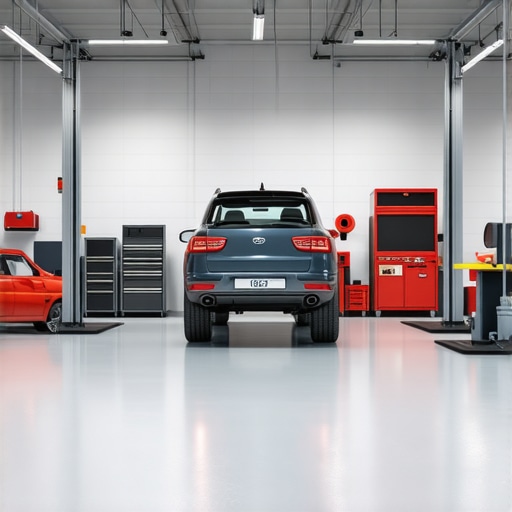
When a customer searches for an alignment near me, they are often a prime candidate for ADAS services, especially if their vehicle is a 2018 or newer model. By grouping these services on your website and your Google profile, you demonstrate a higher level of technical competence. This is where many independent shops can beat “preferred” insurance shops. While the insurance-preferred shop might just “plug and play,” a specialist shop understands the environmental requirements: a perfectly level floor (within 1 degree), specific lighting conditions to avoid glare on targets, and a clear 30-foot space in front of the vehicle.
Highlighting these technical requirements on your service pages doesn’t just educate the customer; it provides the “Expertise” and “Trustworthiness” signals that Google craves. For more on this, visit our ADAS calibration service page to see how we structure these technical explanations to build authority.
2026 SEO: Why Human-Verified Authorship is the Secret Weapon
The SEO world has been flooded with AI-generated content, and Google has responded by doubling down on E-E-A-T (Experience, Expertise, Authoritativeness, and Trustworthiness). In 2026, Google prioritizes content that can be traced back to a real, verified human expert. This is why having a technician like myself – someone with a documented history in collision damage assessment and diagnostics – associated with your shop’s content is so powerful.
When Google sees that the information on your site is authored or reviewed by a verified specialist, it assigns a higher “Trust” score to the entity. This is a significant shift from the old days of just stuffing keywords into a blog post. Understanding why human-verified authors win the 2026 SEO ranking race is essential for any shop owner who wants to stay ahead of the curve. It’s no longer enough to just have a website; you need a “Human Signal” that tells Google your information is safe and accurate.
Furthermore, how Google identifies expert human signals in 2026 SEO involves looking at the author’s digital footprint, including LinkedIn profiles, industry certifications, and previous publications. By leveraging an expert voice, your shop’s website becomes a source of truth, making it much more likely to appear in the Map Pack for high-stakes repairs.
Action Plan: Dominating the Local 3-Pack for Specialized Repairs
If you want to stop losing ADAS jobs to the shop down the street, you need a proactive strategy. Here is a checklist to future-proof your Map Pack ranking:
- Audit Your GBP Categories: Ensure “Auto Repair Shop” is your primary, but add “Auto Electrical Service,” “Wheel Alignment Service,” and “Car Diagnostic Service” as secondary categories.
- Optimize for “Near Me” Intent: Create specific landing pages for each town in your service area, focusing on the technical necessity of ADAS work after common repairs.
- Implement Local Schema: Use LocalBusiness and Service Schema markup to tell Google’s crawlers exactly what you do, where you are, and who is doing the work.
- Incentivize Technical Reviews: Ask your ADAS customers to mention the specific system you calibrated (e.g., “They fixed my Adaptive Cruise Control perfectly”) in their review.
- Leverage Expert Content: Don’t just post generic tips. Post deep dives into the calibration process, showing your targets, your level floor, and your diagnostic software.
By following this plan, you aren’t just “doing SEO” – you are building a digital representation of your shop’s actual physical expertise.
Conclusion: Future-Proofing Your Auto Repair Shop
The gap between shops that “just fix cars” and shops that “specialize in vehicle technology” is widening every day. To win the battle for the Google Map Pack, you must prove to both Google and your potential customers that you are the technical authority in your region. ADAS calibration is the future of automotive repair revenue, but it requires a sophisticated digital strategy to match the sophisticated technology in the vehicles.
Don’t let your investment in training and equipment go to waste. Audit your local presence, claim your expertise, and ensure that when someone searches for a mechanic near me, your shop is the first and only choice they consider. If you need a reliable partner for your vehicle’s needs, find a trusted auto repair near me today and experience the difference that expert calibration makes.