Why Most Local Mechanics Fail to Show Up for Profitable ADAS Calibration Jobs
Why Most Local Mechanics Fail to Show Up for Profitable ADAS Calibration Jobs
The automotive industry is currently undergoing the most significant transformation since the assembly line first rolled out of Detroit. If you walk into a typical auto repair shop today, you’ll see the familiar sights: lifts, wrenches, and the smell of oil. However, the vehicles sitting on those lifts have changed fundamentally. They are no longer just mechanical machines; they are sophisticated, interconnected “computers on wheels.” When a consumer searches for a mechanic near me to handle a simple fender bender or a windshield replacement, they often assume any local shop can return their car to factory specifications. Unfortunately, as an ADAS Technician and Advanced Diagnostics Specialist, I’ve seen firsthand that this isn’t the case. Most local shops are failing to “show up” for the most profitable and critical segment of modern repair: ADAS calibration. While drivers look for an auto repair near me for basic maintenance, they are often unaware that their vehicle’s safety systems are being neglected by shops that lack the expertise to handle high-tech sensors.
The $71,000 Opportunity: Why ADAS is the New Gold Mine
In the world of automotive repair, profit margins on traditional mechanical work are tightening. Oil changes are loss leaders, and even brake jobs are becoming commoditized. However, Advanced Driver Assistance Systems (ADAS) – which include emergency braking, lane-keep assist, and adaptive cruise control – represent a massive financial opportunity. Industry research indicates that for an optimized shop, ADAS calibration can add over $71,000 in annual profit. This isn’t just a “nice-to-have” service; it is a necessity for any vehicle manufactured in the last five years.
Despite this lucrative potential, there is a staggering efficiency gap in the market. Data shows that while approximately 86% of collision shops claim they are handling calibrations in some capacity, only 21% have truly optimized their operations to perform these tasks correctly and profitably. When a customer searches for a mechanic near me after a minor collision, they expect their safety sensors to work. Yet, many shops are either subletting this work at a loss or, worse, ignoring the calibration requirements entirely. This gap creates a massive opening for diagnostic specialists who understand that “showing up” means more than just having a shop door open; it means having the technical infrastructure to support the future of transportation.
The frustration for the consumer is palpable. They find an auto repair shop that looks reputable, but when the “Lane Departure Warning” light stays on after a repair, the shop is often at a loss. This is exactly Why Local Auto Repair Shops Lose Map Pack Rankings for Profitable ADAS Calibration Jobs; they simply cannot fulfill the specialized intent behind the modern driver’s search queries.
The Technical Barriers: It’s More Than Just a Scan Tool
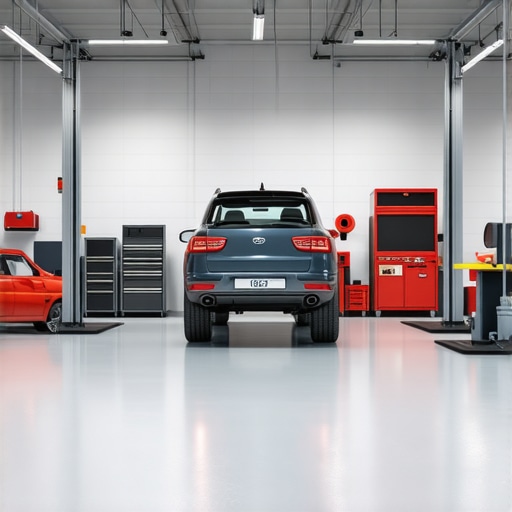
One of the primary reasons your average auto repair shop fails to capitalize on ADAS calibration is the sheer technical and physical barrier to entry. Many shop owners believe that buying a high-end scan tool is enough. In my experience as a diagnostic specialist, a scan tool is only 10% of the equation. Performing a static calibration requires an environment that most traditional garages simply weren’t built for.
- Floor Levelness: This is the silent killer of calibrations. Many OEM guidelines require a floor that is level within a fraction of a degree. Even a 1-degree pitch can cause a front-facing camera to be aimed several feet off-target at a distance of 100 yards. Most local shops have sloped floors for drainage, making them technically ineligible for static ADAS work.
- Lighting and Surroundings: Sensors, especially cameras, are sensitive to light and patterns. Consistent, non-reflective lighting is mandatory. A shop with bright sunlight streaming through open bay doors or cluttered walls with posters and tools can cause a calibration to fail or, more dangerously, to “pass” while being improperly aligned.
- Equipment Costs: The investment in targets, frames, and laser leveling systems (such as those from Autel or Bosch) can easily exceed $30,000 to $50,000. For many, this is a barrier they aren’t willing to cross, which is Why Your Auto Repair Shop Is Losing High-Ticket Electrical System Jobs to Dealerships.
Without a dedicated, controlled environment, a shop is essentially guessing. This is why specialized facilities are becoming the only reliable option for complex electronic repairs. It’s a similar phenomenon to Why Most Valley Mechanic Shops Lose Profitable Diesel Repair Jobs to Less Skilled Competitors; if you don’t have the specific setup, you can’t compete, regardless of your general mechanical skill.
The Liability Trap: Why Many Mechanics Are Afraid to “Show Up”
There is a “Liability or Opportunity” debate raging in the industry. Many mechanics are rightfully terrified of the legal ramifications of a failed ADAS system. If a shop performs an alignment near me but fails to recalibrate the Steering Angle Sensor (SAS), the vehicle’s electronic stability control or lane-keep assist could intervene incorrectly, leading to a crash.
In the field, we often say that “ADAS is a management problem, not just a technical one.” It requires a complete shift in workflow. Every time a bumper is removed, a windshield is replaced, or a suspension component is changed, a calibration is likely required by OEM guidelines. If a shop skips this to save time or because they lack the equipment, they are assuming 100% of the liability if that vehicle is involved in an accident later. This fear causes many shops to shy away from the work entirely, leaving money on the table and leaving their customers at risk. They might be great at a standard alignment near me, but if they don’t understand how that alignment interacts with the radar and camera systems, they are only doing half the job.
This lack of visibility and specialized service is a common theme in local business. Just as Why Your Garage Door Repair Business is Invisible in Local Map Packs often stems from a failure to highlight specific, high-value services, auto shops remain invisible for ADAS because they aren’t documenting their capability to handle these high-stakes safety repairs.
The Insurance and Documentation Hurdle
Another significant barrier is the administrative “red tape” involved in getting paid for ADAS calibration. Insurance companies are increasingly scrutinized on their payouts, and they will not reimburse a shop for calibration unless there is meticulous documentation. This includes “before and after” scan reports, photos of the target setup, and proof that OEM guidelines were followed to the letter.
Many local shops lack the digital workflow to provide this proof. They might be able to physically perform the work, but if they can’t document it, the insurance company will deny the claim, and the shop loses the profit. As a specialist, I emphasize that the documentation is just as important as the repair itself. Without a post-calibration report, there is no proof the vehicle is safe to return to the road. This administrative burden is a major reason why the “average” auto repair shop chooses to ignore the ADAS market, even though the demand is skyrocketing.
How to Identify a True ADAS Specialist in Your Area
For consumers and collision shop owners looking to outsource these tasks, it is vital to know what to look for. You shouldn’t trust just any auto repair shop with your vehicle’s “eyes” and “ears.” Here is a checklist to identify a true professional:
- OEM Guideline Adherence: Do they have access to and follow the specific repair manuals for your vehicle’s make and year?
- Post-Calibration Reports: Do they provide a digital printout showing the system was successfully calibrated?
- Controlled Environment: Do they have a dedicated space with level floors and proper lighting for static ADAS calibration?
- Specialized Training: Are the technicians certified specifically in ADAS and advanced diagnostics?
If you are looking for an alignment near me and your car has lane-keep assist, you must ask if they also calibrate the SAS and the forward-facing camera. If the answer is “no” or “we don’t need to,” you should take your vehicle elsewhere. Professionalism in this field is defined by precision, not by how quickly a shop can get a car out the door.
Conclusion: The Future of the Local Mechanic
The days of the “grease monkey” are fading. The “mechanic near me” of the future must be a tech-first specialist who is as comfortable with a laptop as they are with a torque wrench. ADAS calibration is not a fad; it is the new standard of automotive safety. Shops that fail to invest in the space, equipment, and training required for these systems are not just missing out on $71,000 in annual profit – they are becoming obsolete.
At Advanced Automotive Connections, we pride ourselves on being at the forefront of this technological shift. We understand the liability, the technical requirements, and the necessity of keeping your family safe on the road. Whether you are a car owner or a shop looking for a reliable partner, remember that when it comes to ADAS, there is no room for error. Visit us today for expert service that you can trust.