
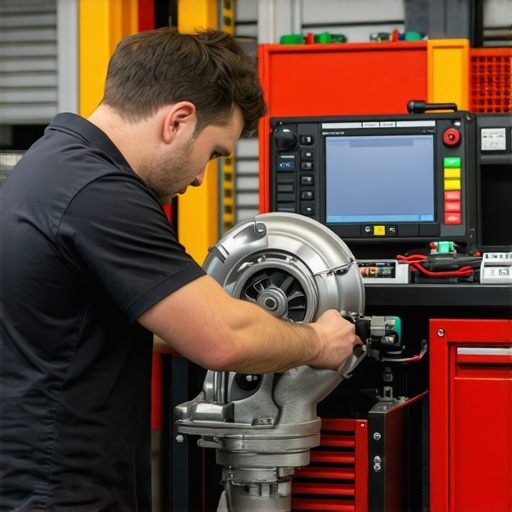
Why Your Las Cruces Diesel Mechanic is Missing Common Turbo Failures
Why Your Las Cruces Diesel Mechanic is Missing Common Turbo Failures
For diesel truck owners in the Mesilla Valley, the sound of a turbocharger spooling up is the sound of productivity. Whether you are hauling equipment up to the Organ Mountains or running a fleet across the I-10 corridor, your engine’s turbocharger is the heart of its performance. However, a growing frustration is mounting among local drivers: they take their rigs to a diesel mechanic las cruces for a loss of power or a strange whistling noise, only to have the same issues return a week later. The reality is that many general auto repair near me locations are fundamentally ill-equipped to diagnose the high-pressure, high-heat environment of a modern diesel turbocharger.
As Howard Schroeder, owner of Caballo Emergency Truck Repair, I have seen hundreds of turbochargers replaced prematurely – and hundreds more that were “cleared” by other shops only to fail catastrophically shortly after. The most critical data point that general shops overlook is that insufficient lubrication is the #1 cause of turbo damage, yet they rarely investigate the root cause of that lubrication failure. Instead of fixing the system, they simply swap the part. This blog explores why the standard diagnostic approach in Las Cruces often falls short and what technical nuances your mechanic is likely missing.
The Complexity Gap: Why General “Auto Repair Near Me” Isn’t Enough for Turbos
The average Mechanic Shop Near Me is designed to handle a high volume of gasoline-powered passenger vehicles. While these shops are excellent for brake jobs or spark plug replacements, the thermodynamics of a heavy-duty diesel engine are an entirely different beast. A diesel turbocharger operates at speeds exceeding 100,000 RPM and can endure exhaust gas temperatures (EGTs) that would melt a standard gasoline engine’s internals. When a general mechanic plugs in a standard OBD-II scanner, they are often looking for simple “underboost” or “overboost” codes. These codes are symptoms, not diagnoses.
One of the most significant gaps in expertise involves Variable Geometry Turbo (VGT) technology. Most modern trucks, including the ubiquitous 6.7L Cummins found all over New Mexico, utilize VGT actuators to adjust the aspect ratio of the turbo depending on engine load. General shops frequently misdiagnose a sticking VGT vane or a failed electronic actuator as a total internal turbo failure. This leads to the customer being billed for a $4,000 turbo replacement when a $700 actuator or a simple cleaning of the carbon soot buildup would have sufficed. This lack of specialized knowledge is a primary reason Why Most Valley Mechanic Shops Lose Profitable Diesel Repair Jobs to Less Skilled Competitors who understand the nuance of diesel diagnostics.
Furthermore, the pressure testing required for diesel systems is far more rigorous than for gas engines. A tiny pinhole leak in a charge air cooler (CAC) or a loose boot can cause a turbo to overwork itself into an early grave. If your mechanic isn’t performing a dedicated boost leak test with a smoke machine or pressurized air, they aren’t giving you a real diagnosis.
3 Common Turbo Failures Las Cruces Mechanics Overlook
In the unique climate of Southern New Mexico, turbochargers face environmental stressors that don’t exist in other parts of the country. Here are the three most common failures that are routinely missed during a standard inspection.
1. The “Invisible” Oil Starvation Issue
Most mechanics check your oil level and, if it’s within the “safe” zone on the dipstick, they assume the turbo is being lubricated. This is a dangerous assumption. Turbochargers require a consistent, high-pressure flow of clean oil to maintain the hydrodynamic film that prevents the shaft from touching the bearings. In the extreme Las Cruces heat, oil undergoes thermal breakdown much faster than in cooler climates. This leads to carbonized oil deposits, known as “coking,” inside the oil feed lines.
A mechanic might install a brand-new turbocharger but fail to replace or thoroughly clean the oil feed and drain lines. If those lines are partially restricted by coked oil, the new turbo will suffer from oil starvation from its very first minute of operation. Within a few thousand miles, the new bearings will score, and the owner is back to square one. Real expertise means understanding that the turbo is the victim of the oiling system, not the cause of the failure.
2. Air Intake Contamination (The Dust Factor)
We live in a high-dust environment. Between the spring winds and the sandy soil of the Mesilla Valley, the air intake system of a diesel engine is under constant assault. General Car repair shops near me often check the air filter and call it a day. However, they frequently miss “dusted” compressor wheels. Even microscopic particulates that bypass a poorly seated filter or enter through a small tear in the intake piping act like sandblasting media at 100,000 RPM.
This “sandblasting” effect erodes the leading edges of the compressor wheel blades. This reduces the turbo’s efficiency, forcing it to spin faster to maintain the same boost levels, which eventually leads to bearing failure or a broken shaft. A specialist looks for the specific “peppering” pattern on the compressor blades – a sign that the intake tract is compromised – rather than just looking at the filter housing.
3. VGT Actuator Calibration Errors
As mentioned earlier, the VGT actuator is a common point of failure, especially on the 6.7 Cummins and the 6.0/6.4 Powerstroke engines. The issue is that these actuators are electronic components that live in a high-vibration, high-heat environment. Often, the internal gears of the actuator will strip, or the electronics will “lose” their calibration. A general diesel mechanic las cruces might see a code for “Turbocharger Position Sensor” and assume the entire unit is junk.
In reality, specialized diagnostic tools can often recalibrate these actuators or identify that only the actuator needs replacement. Furthermore, many mechanics fail to check the mechanical linkage. If the turbo’s internal vanes are stuck due to excessive soot (often caused by excessive idling or poor fuel quality), a new actuator will simply break itself trying to move the stuck parts. The diagnosis must include a manual check of the vane sweep to ensure the turbo is mechanically sound before blaming the electronics.
Identifying the Symptoms: What You See vs. What the Mechanic Misses
To help you determine if your shop is giving you the full story, consider this comparison of common symptoms and their frequently missed root causes.
| Symptom Observed by Owner | Common Misdiagnosis | Real Technical Cause |
|---|---|---|
| High-pitched whining or whistling | Worn serpentine belt or pulley | Boost leak at the CAC or a chipped compressor wheel |
| Excessive black smoke under load | Bad fuel or “dirty” injectors | Turbo not providing enough air to match fuel delivery (VGT stuck) |
| Oil in the intake piping | Blown turbo seals (leads to immediate replacement) | High crankcase pressure or a clogged CCV filter |
| Intermittent “Limp Mode” | Faulty ECM or wiring harness | VGT actuator calibration drift due to heat soak |
It is vital to recognize the “Turbo Failure Warning Signs.” If you notice a sudden drop in fuel economy, an increase in exhaust smoke, or a change in the “tone” of your engine, you are likely dealing with a turbo-related issue. However, as the table shows, the solution isn’t always a new turbo. It’s often a secondary system – like the crankcase ventilation or the charge air system – that is causing the turbo to appear faulty.
The High Cost of Misdiagnosis in the Mesilla Valley
The financial impact of taking your truck to an inexperienced diesel mechanic las cruces can be staggering. A misdiagnosis usually leads to one of two outcomes: the “parts cannon” or the “ticking time bomb.” In the “parts cannon” scenario, the shop replaces expensive components one by one until the problem goes away, often costing the owner thousands of dollars in unnecessary labor and parts. In the “ticking time bomb” scenario, a shop misses a minor issue – like a restricted oil drain line – that eventually leads to a catastrophic turbo failure. When a turbo “blows,” it can send metal shards directly into the engine’s intake, potentially destroying the entire long block.
For more information on the technical intricacies of these engines, you can read about diesel mechanic las cruces services that focus on root-cause analysis. In Las Cruces, where many of us rely on our trucks for our livelihoods, we cannot afford the downtime associated with “trial and error” mechanics. A proper diagnosis involves checking oil pressure at the turbo inlet, performing a boost leak test, and using an oscilloscope to check the signals going to the VGT actuator. If your shop isn’t doing these things, they are just guessing with your money.
How to Vet a Mechanic Shop Near Me for Diesel Expertise
If you are searching for an Auto Repair Shop las cruces, you need to look beyond the flashy signs and Google ratings. You need to ask technical questions that separate the generalists from the specialists. A high-quality Auto Repair Shop las cruces should be able to answer the following questions with confidence:
- “Do you perform a boost leak test as part of your turbo diagnostic?” If they say they just look for codes, walk away.
- “Can you bench-test or electronically calibrate a VGT actuator?” Specialists have the software (like Cummins Insite or Ford IDS) to perform these tasks.
- “Do you inspect the oil feed and drain lines whenever a turbo is serviced?” This is a non-negotiable step for any reputable diesel tech.
- “How do you check for compressor wheel ‘dusting’?” They should mention removing the intake boot for a visual and physical inspection of the shaft play and blade condition.
Furthermore, consider the specific engine you are running. The 7.3 Powerstroke is legendary for its reliability, but it is prone to oil leaks in the turbo pedestal and “up-pipe” leaks that mimic turbo failure. The 6.7 Cummins is a powerhouse but is notoriously hard on its VGT actuators. A shop that understands these engine-specific quirks is worth its weight in gold. Don’t be afraid to ask for their experience with your specific platform.
Conclusion: Don’t Let a Simple Fix Turn Into a $5,000 Replacement
The turbocharger is one of the most misunderstood components in the diesel engine. Because it sits at the intersection of the lubrication, cooling, intake, and exhaust systems, it is often the first thing to show symptoms when something else goes wrong. Unfortunately, this also makes it the first thing many shops want to replace. By understanding the common failures that general mechanics miss – from oil coking to VGT calibration – you can protect your vehicle and your wallet.
Howard Schroeder and the team at Caballo Emergency Truck Repair emphasize that preventive maintenance is the only way to ensure turbo longevity. This includes using high-quality synthetic oils, changing your air filters more frequently than the manual suggests (due to our NM dust), and ensuring your cooling system is operating at peak efficiency to prevent turbo heat soak. If you suspect your turbo is failing, don’t settle for a “code scan” diagnosis. Visit specialized Car repair shops near me that have the tools and the technical training to handle heavy-duty diesel repairs properly. A specialized diagnostic today can save you a $5,000 replacement tomorrow.